Welcome to the next generation of sport management.
For years, organizing leagues, managing player profiles, and tracking results meant wrestling with complicated, fragile Excel spreadsheets. Whether you were scheduling soccer matches, basketball tournaments, badminton brackets, running meets, or esports brackets, the headache was always the same. Those days are officially over.
Welcome to aLeagues.com, the ultimate social platform built to unite sports communities. To give you total control over your tournaments, we’ve built a revolutionary, format-free match scheduling engine. Whether your competition uses traditional group stages, high-stakes knockouts, Swiss systems, or a completely customized, complex hybrid of them all, aLeagues allows you to seamlessly generate matches between teams or individual players at any phase of your tournament—across any sport.
Best of all? We believe the tools to grow the game should be accessible to everyone. That’s why all of our core features—including League Management, Team Management, and Individual Profile Management—are 100% free. No formulas, no broken cells, and zero cost to get started.
Special Note: To support those shaping the future of sports, aLeagues is proud to offer special free access to our premium features for all teachers and coaches. Step away from the spreadsheets, save your budget, and experience how easy managing your league can be.
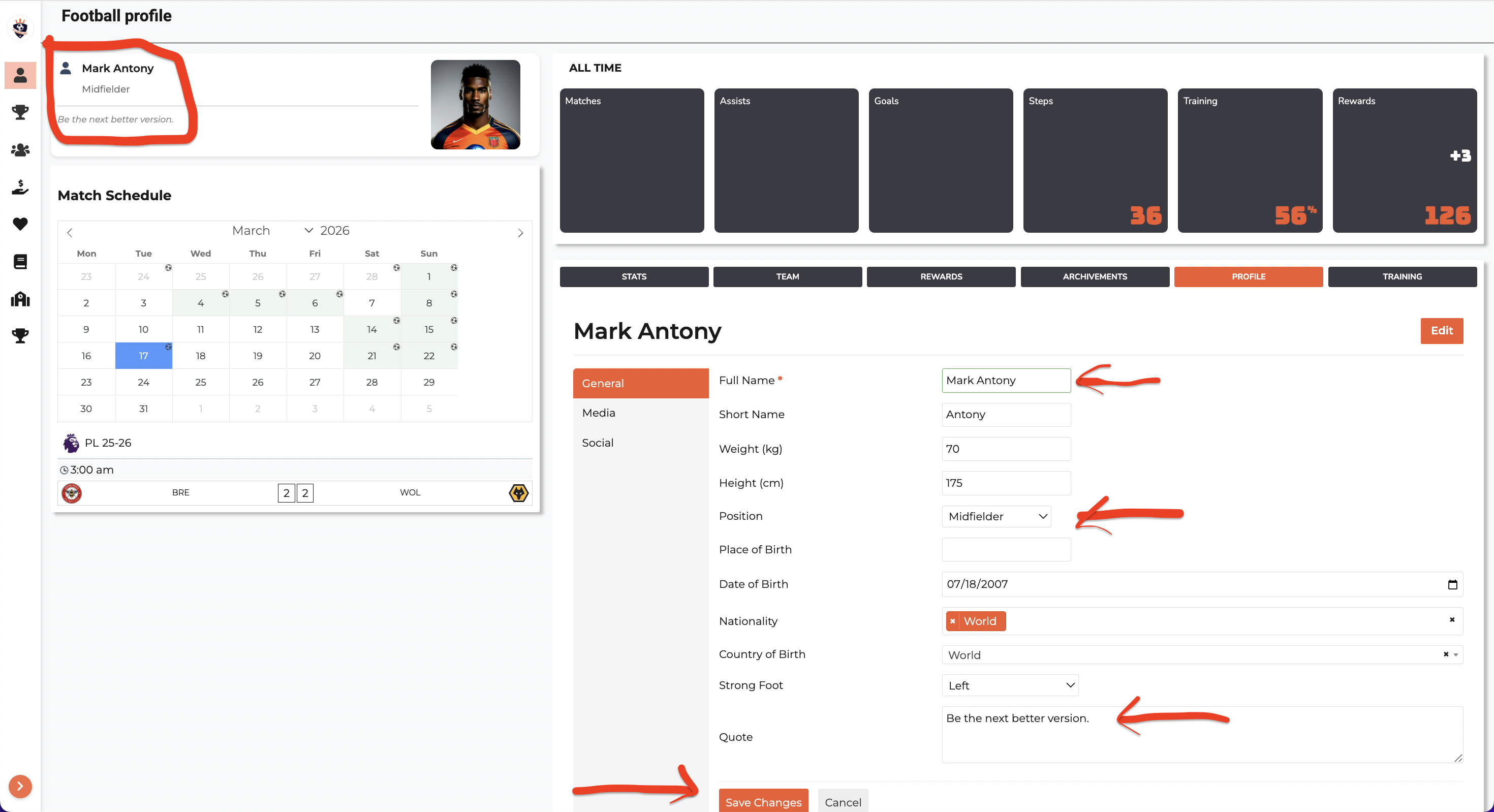
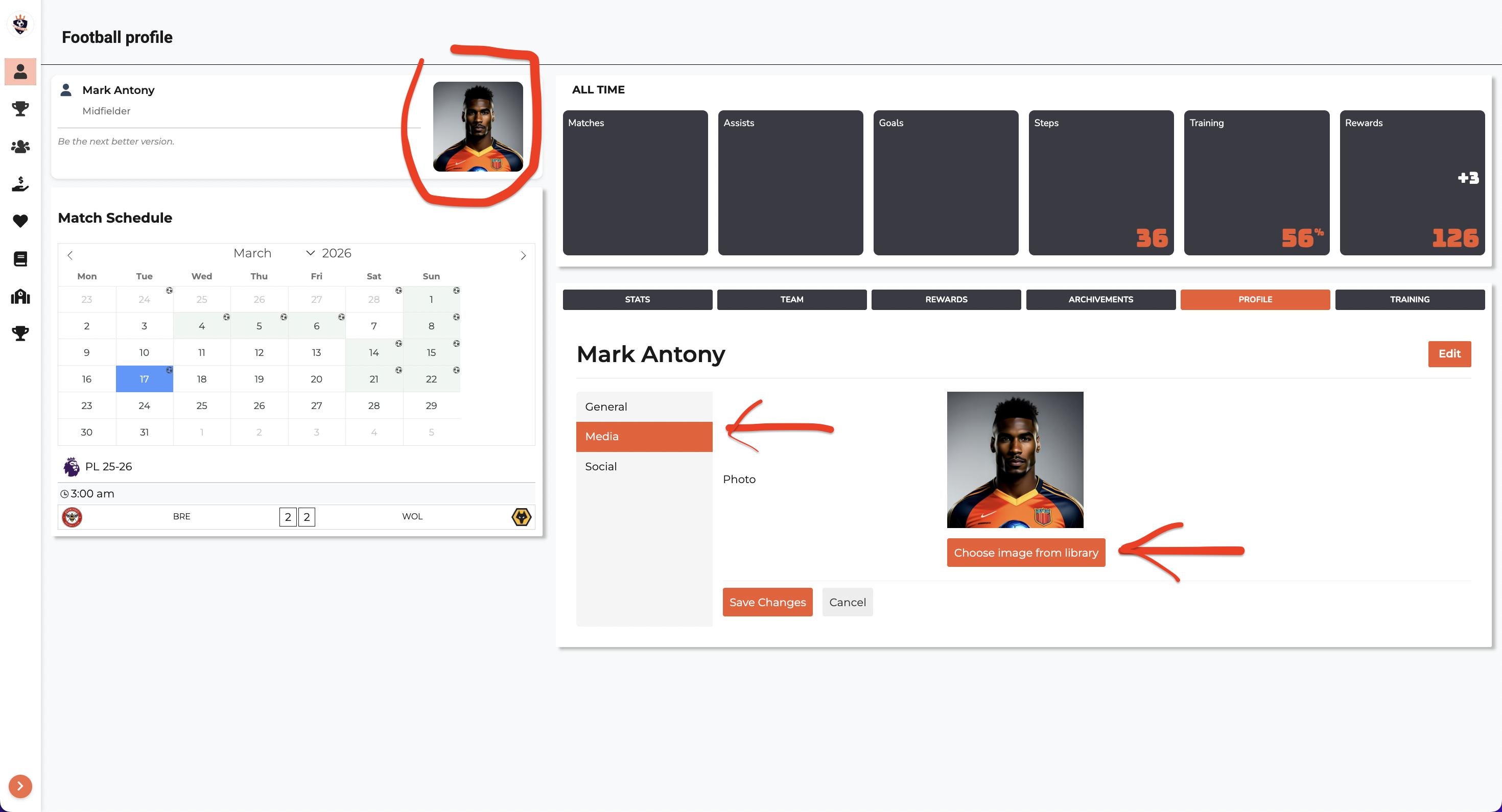
Module 1: Create Your Account and Football Profile
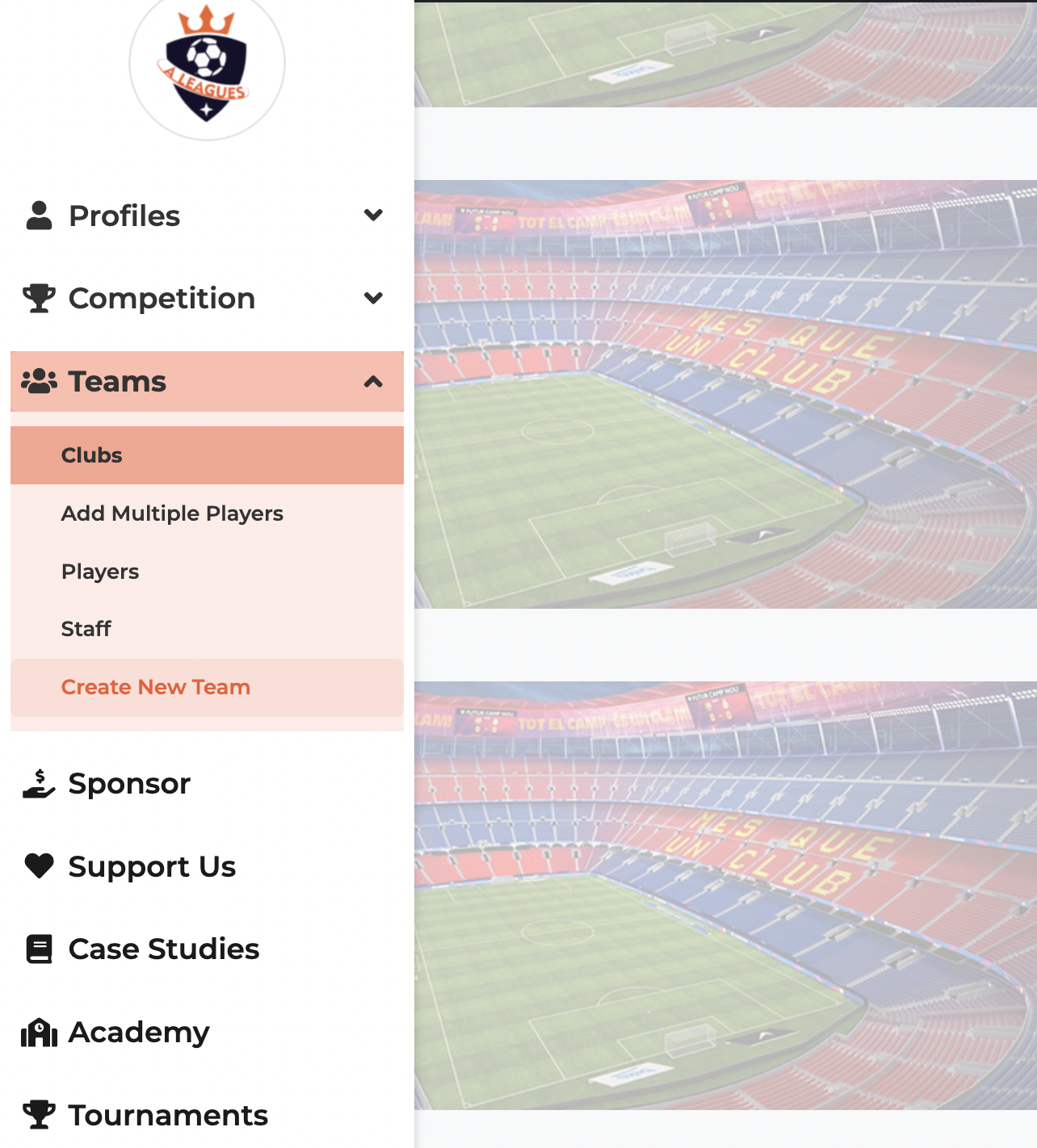
Module 2.1: Create A Soccer Team
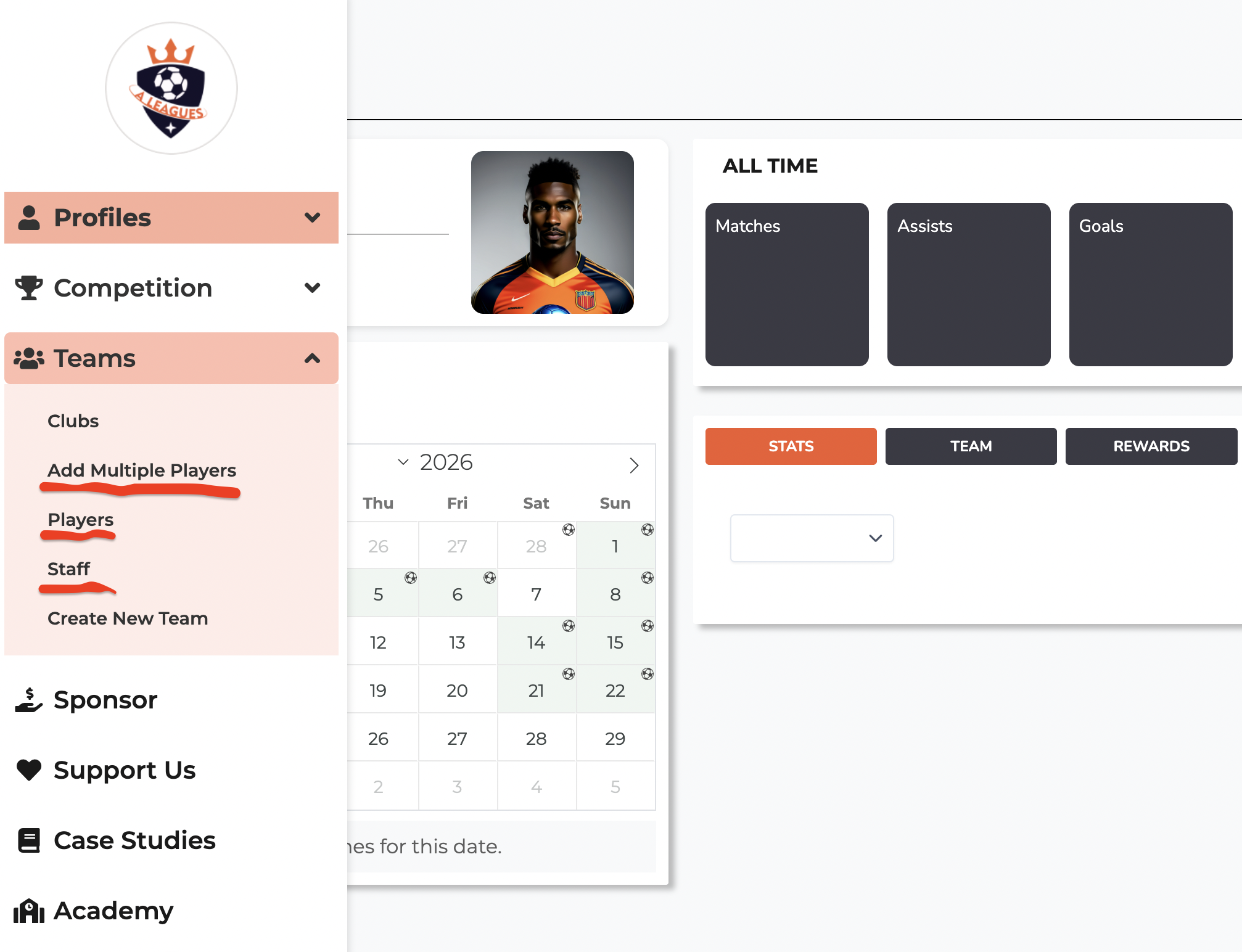
Module 2.2: Create Players and Team’s Staff
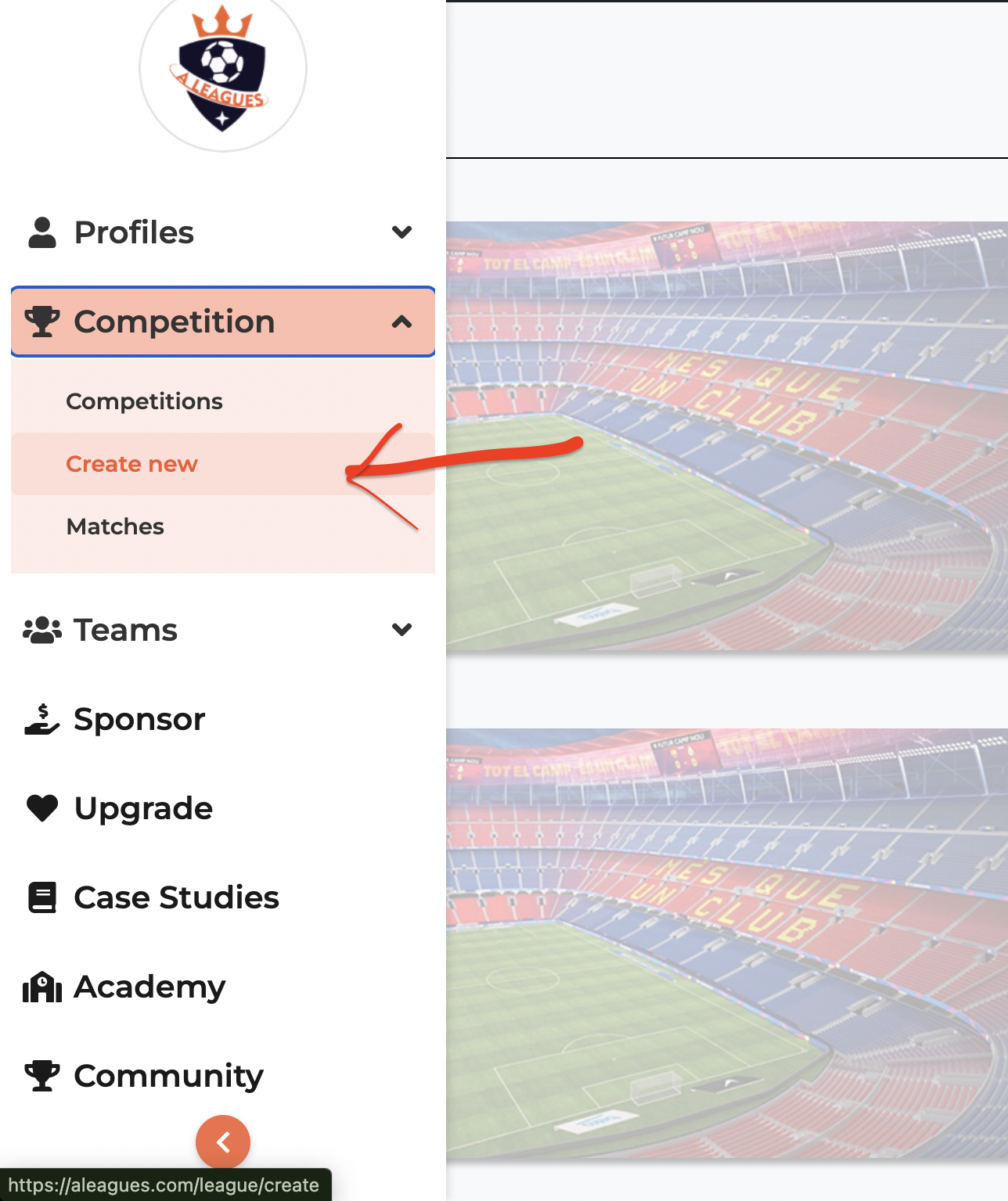
Module 3.1: Create A Friendly Competition
In this version, we define a friendly match as a round-robin league consisting of two teams to enhance the gamification of your matches over time. As a team leader, you will have access to an overview of statistics for both single matches and the cumulative totals of all friendly matches your team has played, including goals, assists, key passes, and cards.
Step 1:
Step 2:
Step 3:
Step 4:
Step 5: Complete at least three sections. You can select two teams now or bypass this step until Step 6 to speed up the setup.
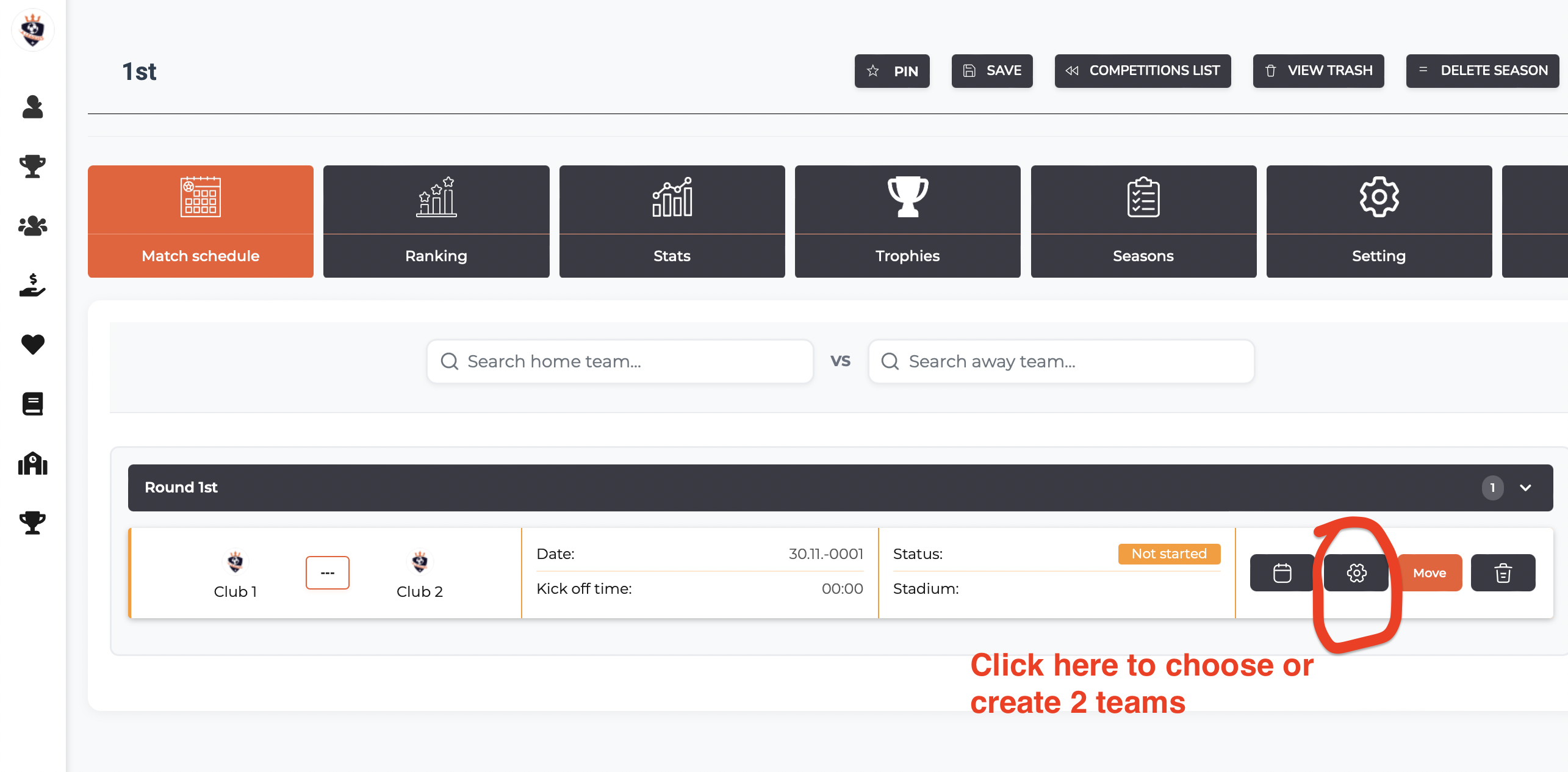
Step 6: Choose or create 2 teams to proceed to the next step
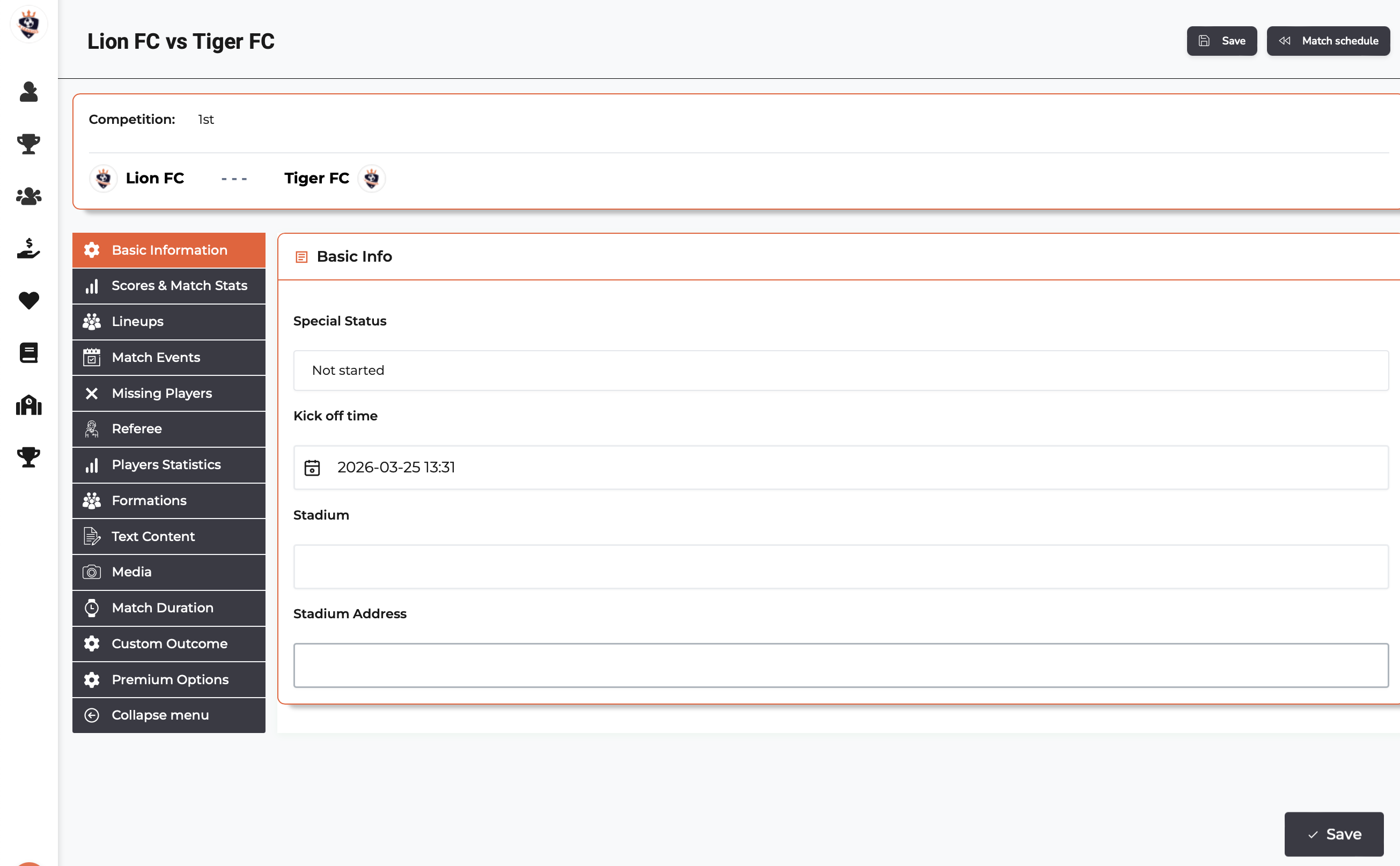
Step 7: After selecting or creating two teams and saving the changes, the statistics dashboard will be displayed.
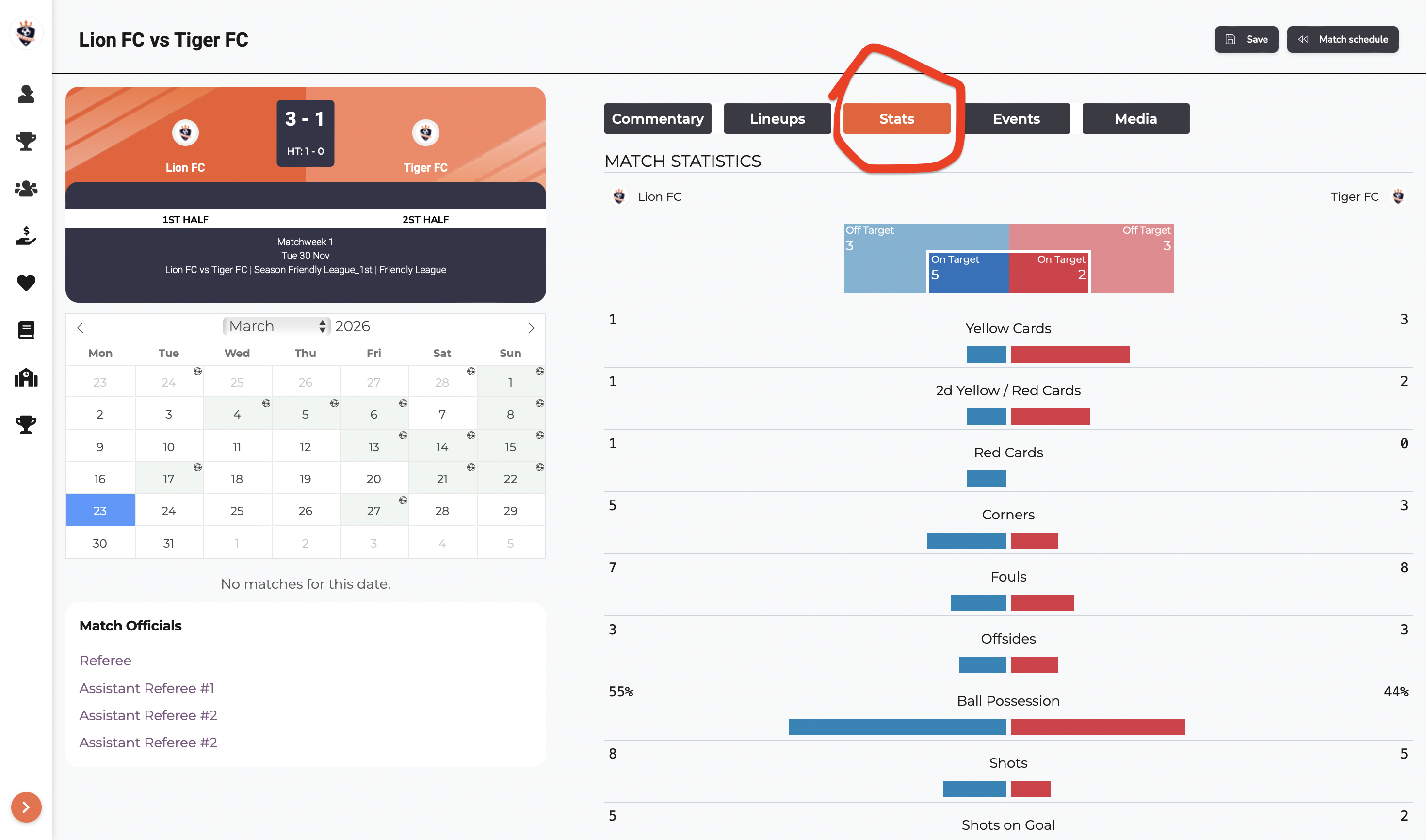
Step 7.1: After you fill out Scores & Match Stats and save, click the button View As and the results should look like this
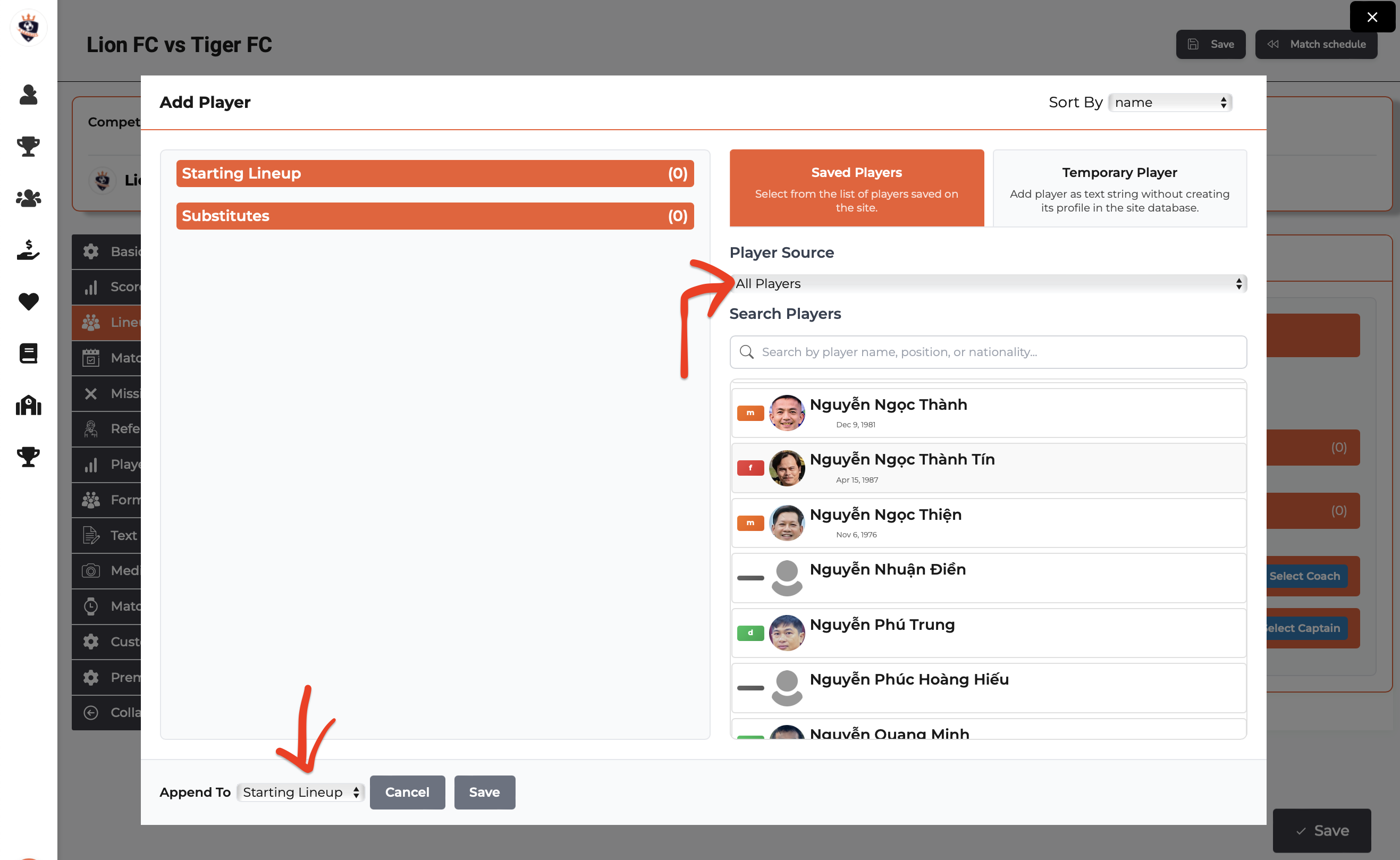
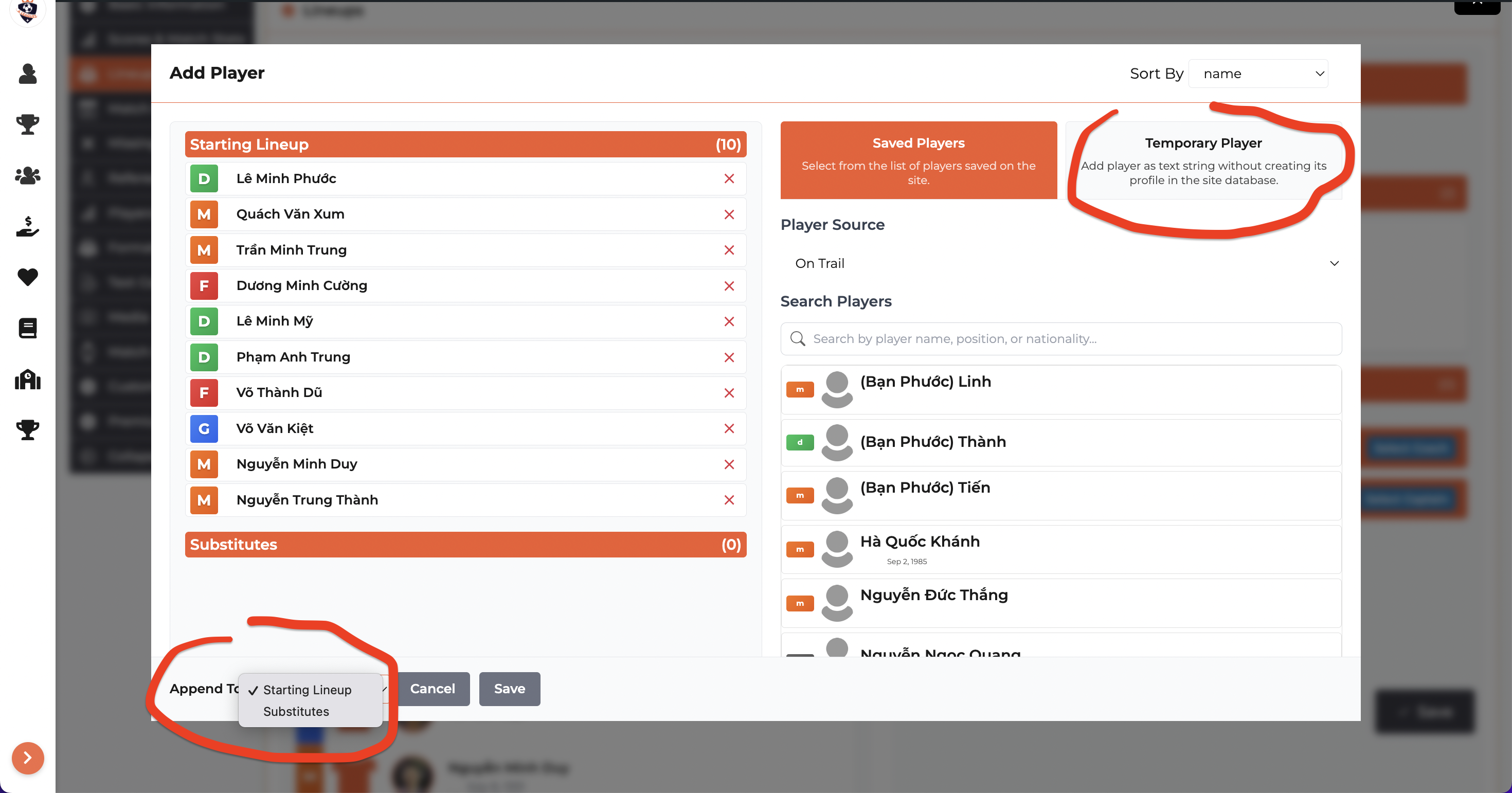
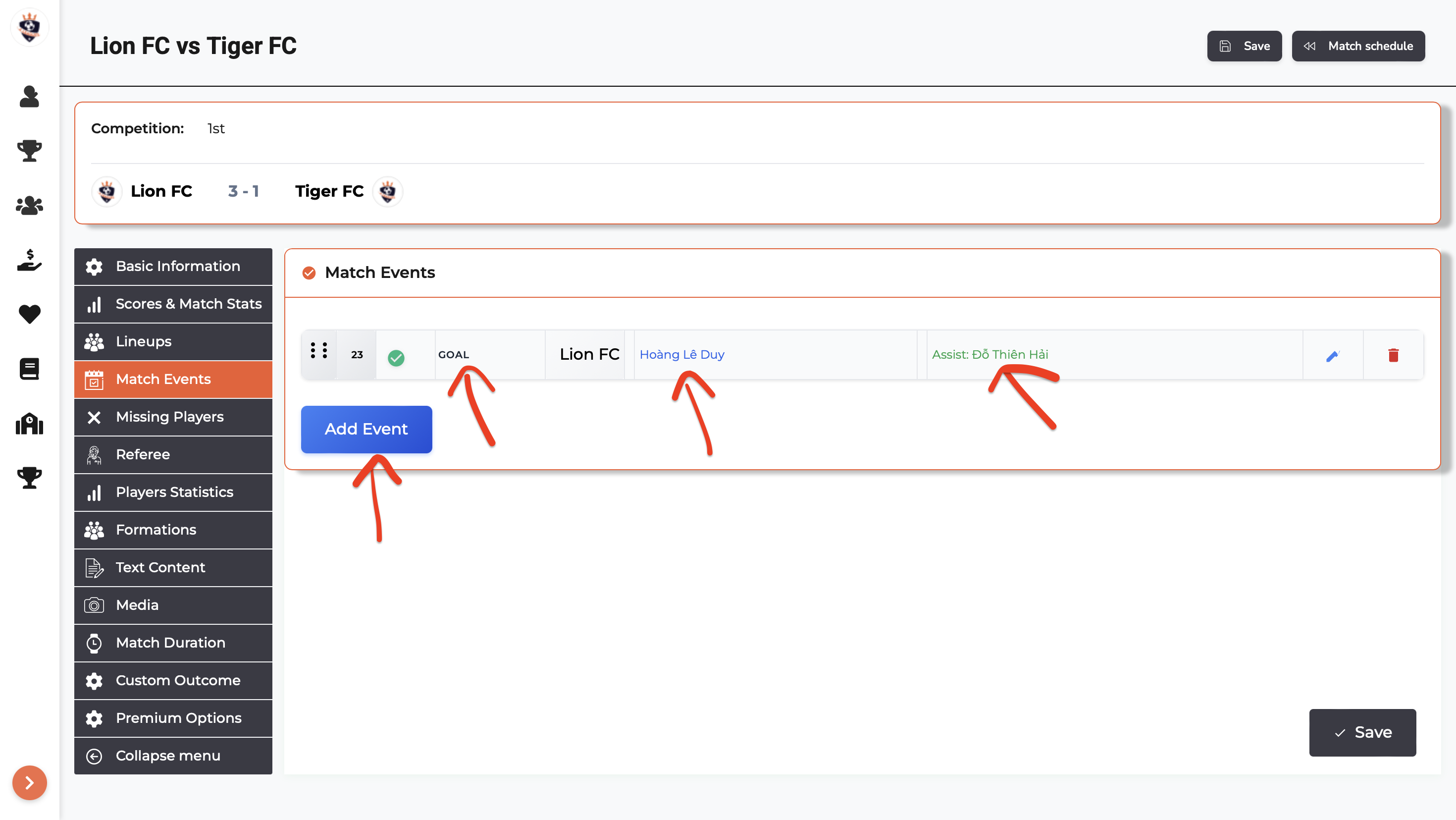
Step 7.2: To add detail for Match Events (Goal; Assists, Cards, etc), you need to fill out section Lineups beforehand.
To record a player’s stats (Matches Played, Goals, Key passes, etc.), they must be in the Starting Lineup or brought on as a substitute. Stats will not be tracked for players who remain unused on the substitutes bench or are designated as Temporary Players.
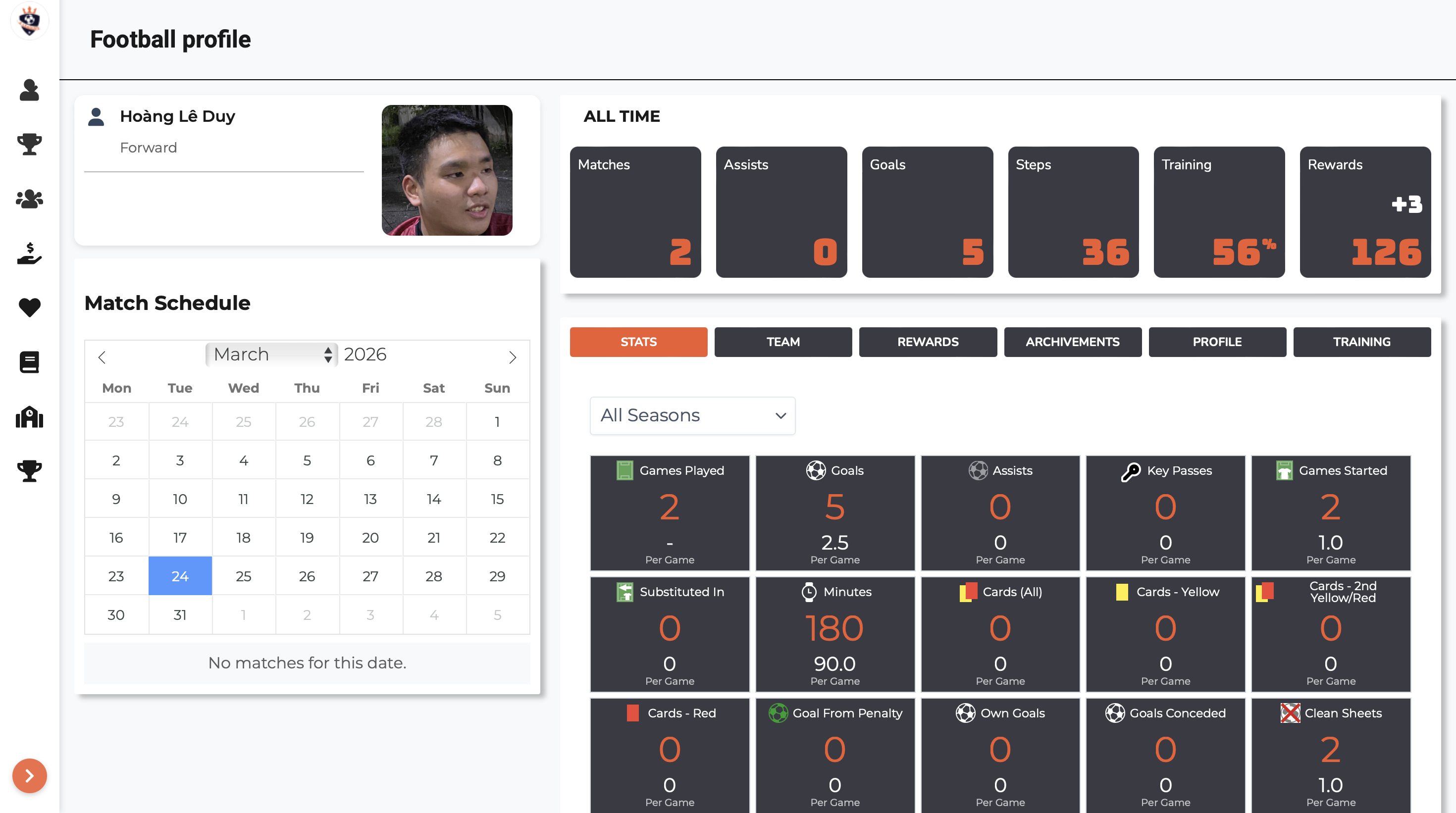
Step 7.3: The Match Events section is where you track players’ stats, help them upgrade their profiles, and earn extra rewards.
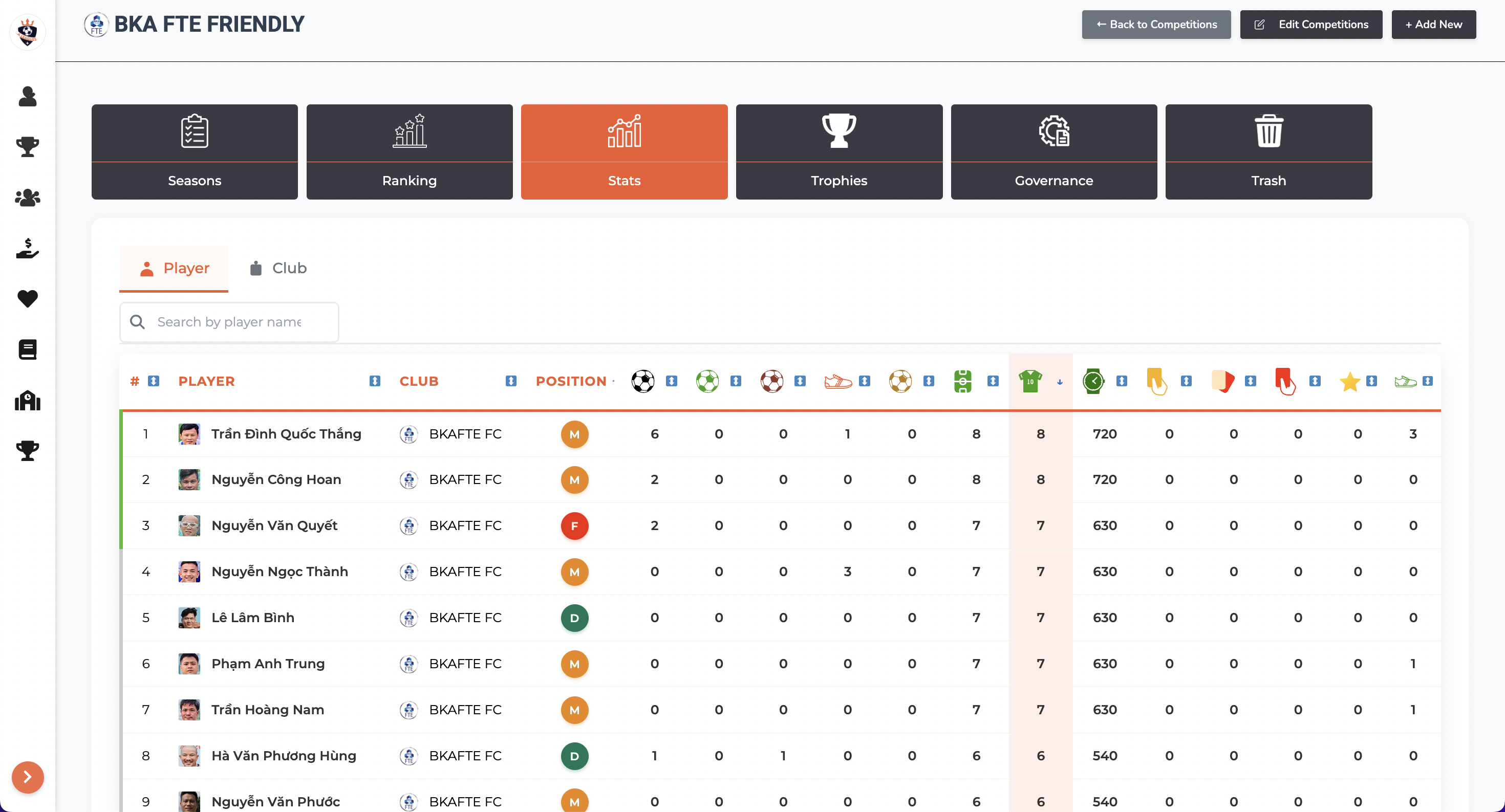
Step 7.5: Your team’s leaderboard.
Module 3.2: Permission
You may assign co-admins to assist in managing teams, leagues, and seasons for any of your created leagues.
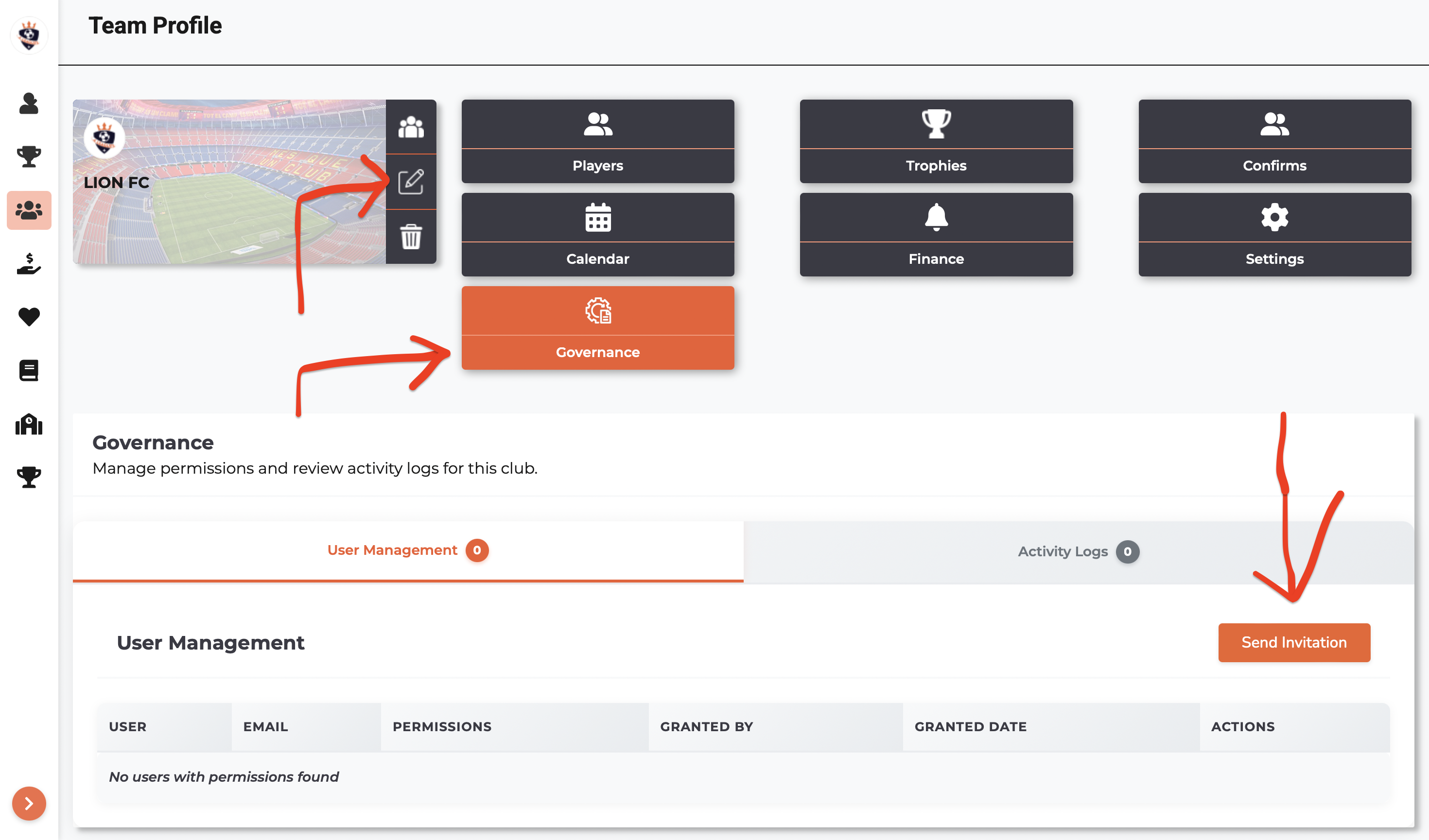
3.2.1: Assign co-admins for a team:
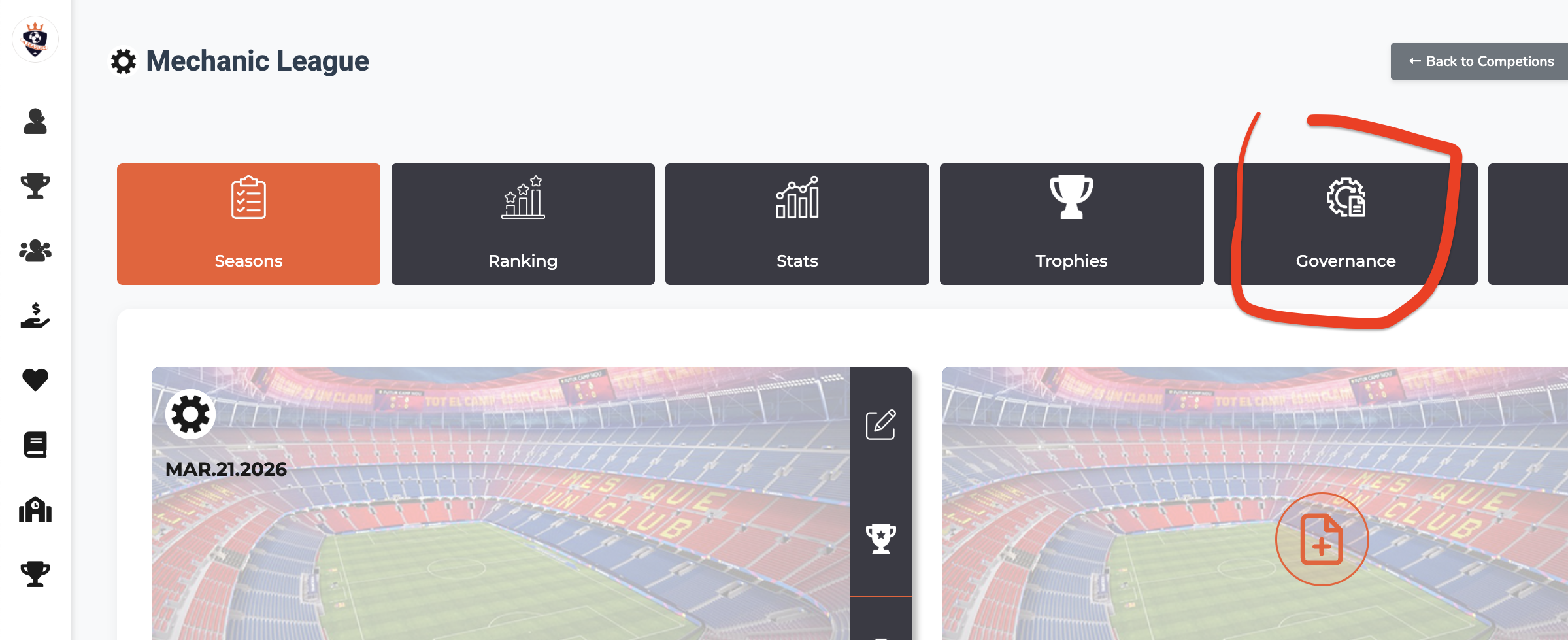
3.2.2: Assign co-admins for a competition (League/ Cup/ A Single Match)
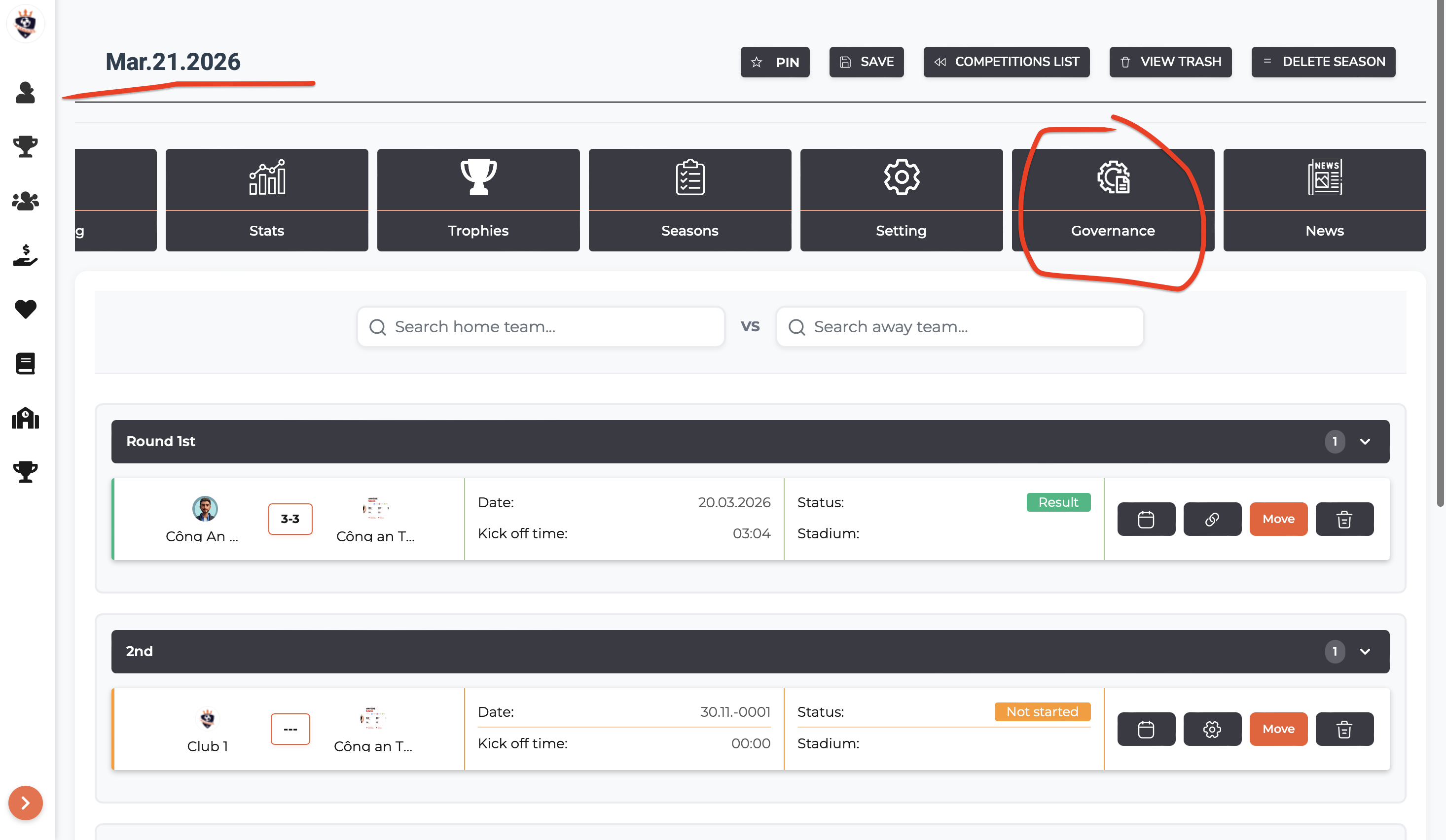
3.2.3: Assign co-admins for a season in a league or cup
Module 3.3: Manage Players and Stats For A Match or A Season
Add a player for a new match or a specific season
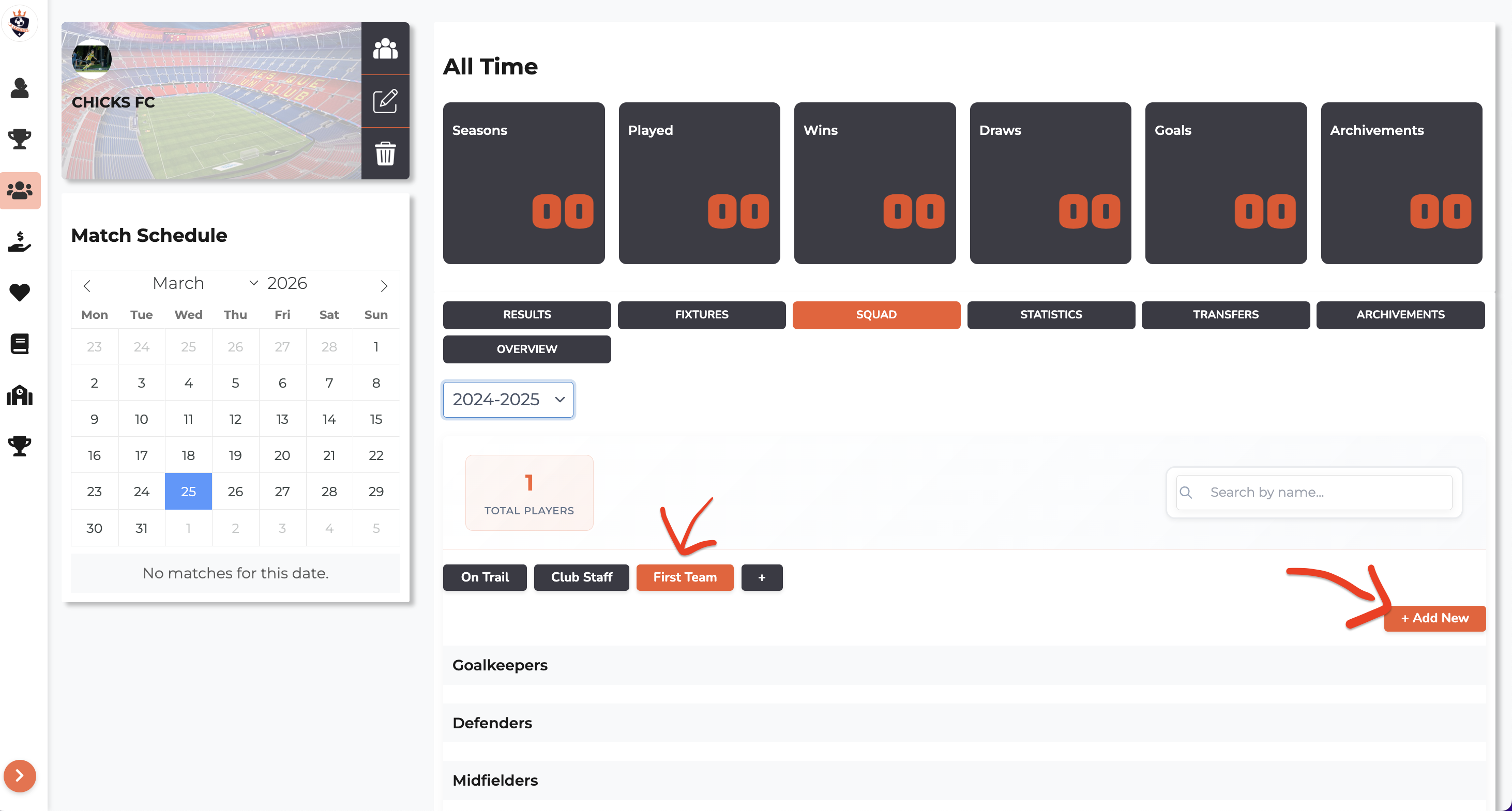
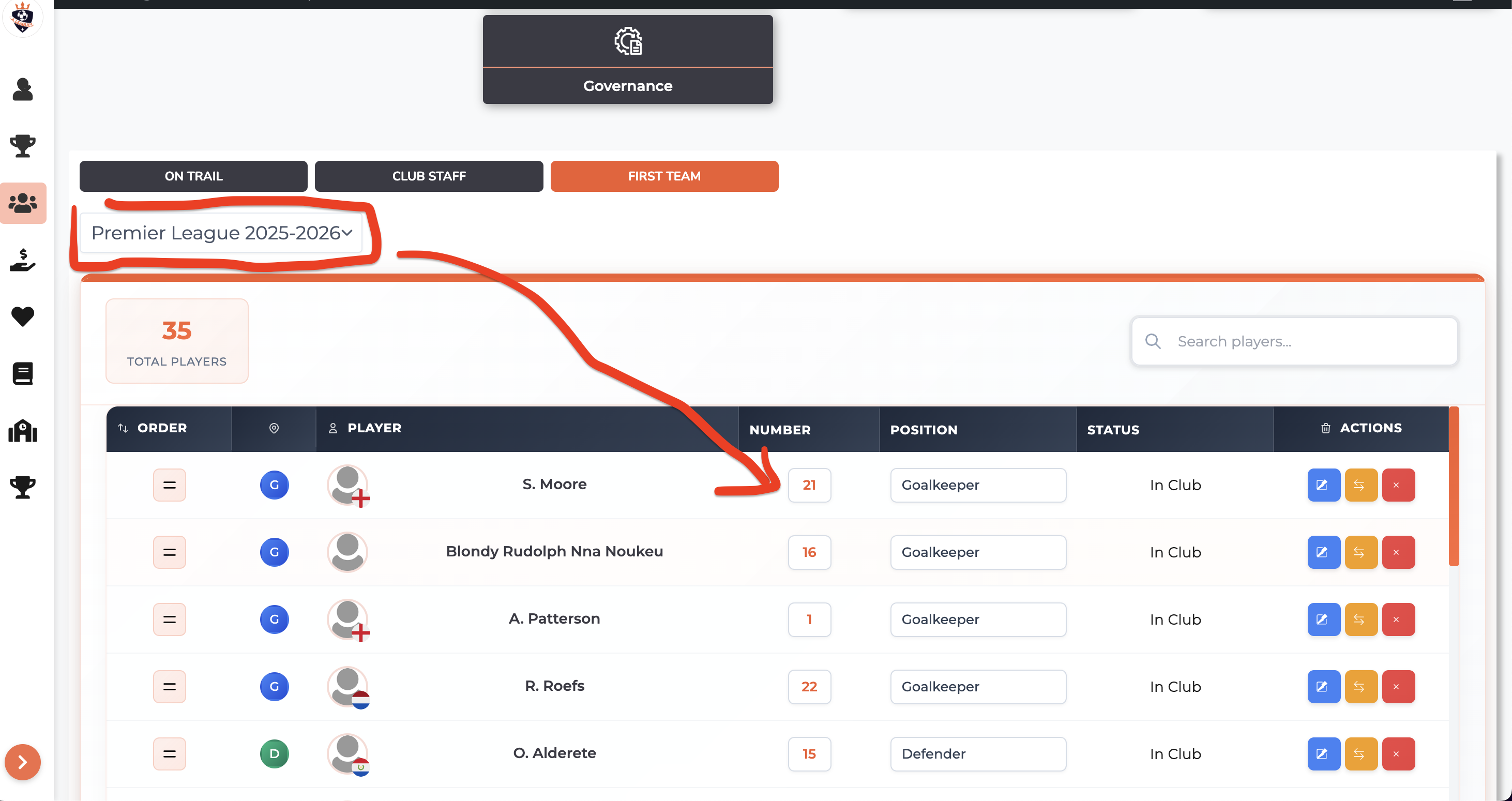
In your SQUAD tab, pick a season from dropdown list, pick First Team tab, click the button + Add New.
Remember: Adding a player to one season won’t add them to all seasons. You’ll need to add the player to each season you want them to participate in.
Jersey number
For the same player, club managers can assign different squad numbers for different seasons or competitions.
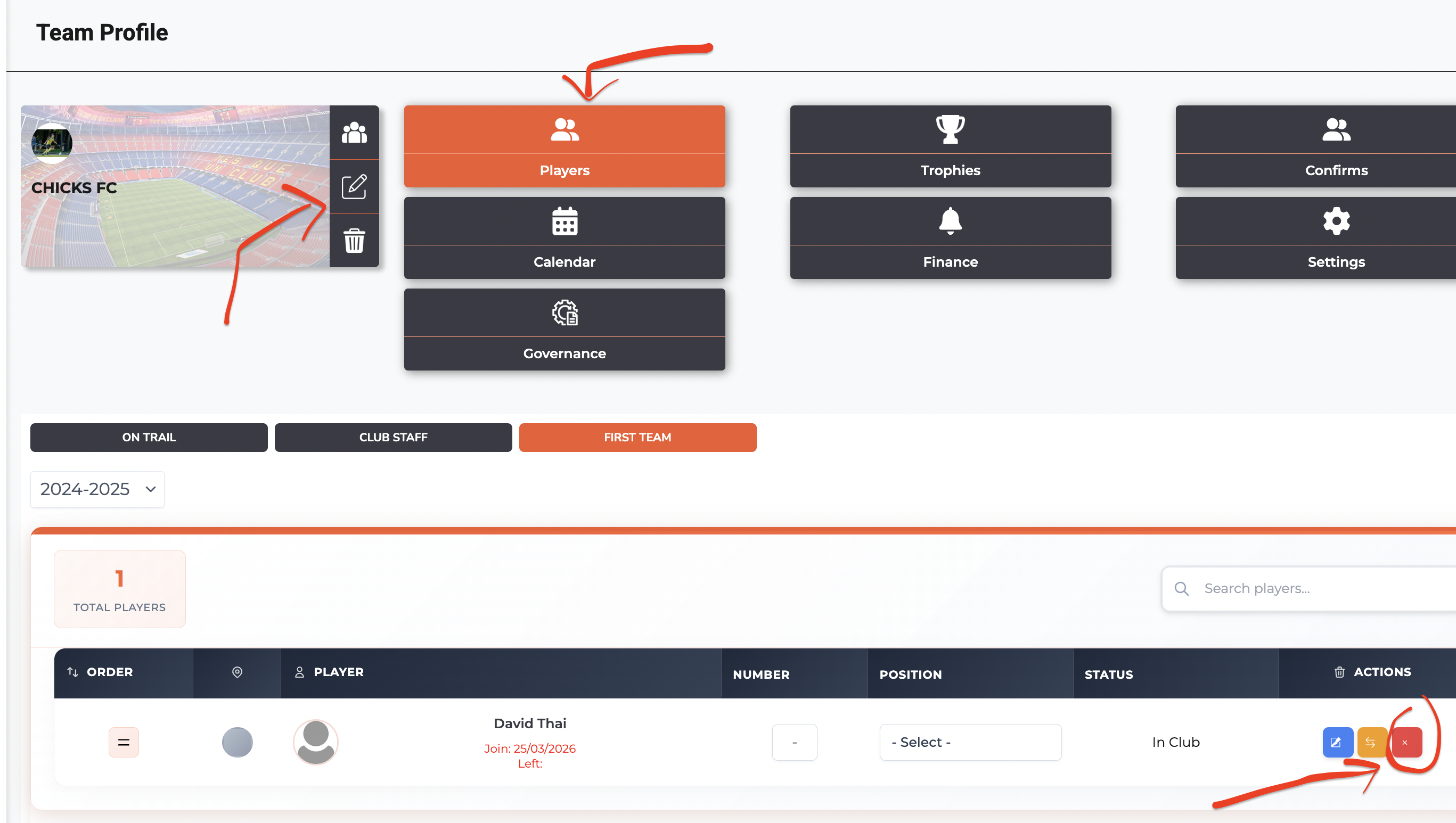
Remove a player from a season
Instructions
Step 1: From the Team Profile, select +Add New or Settings to navigate to the Player management screen.
Step 2: Select the specific Season from which you wish to remove the player.
Step 3: Locate the row containing the player’s name and click the Remove button.
Expected Result
The removed player will no longer appear in the active roster for that season.
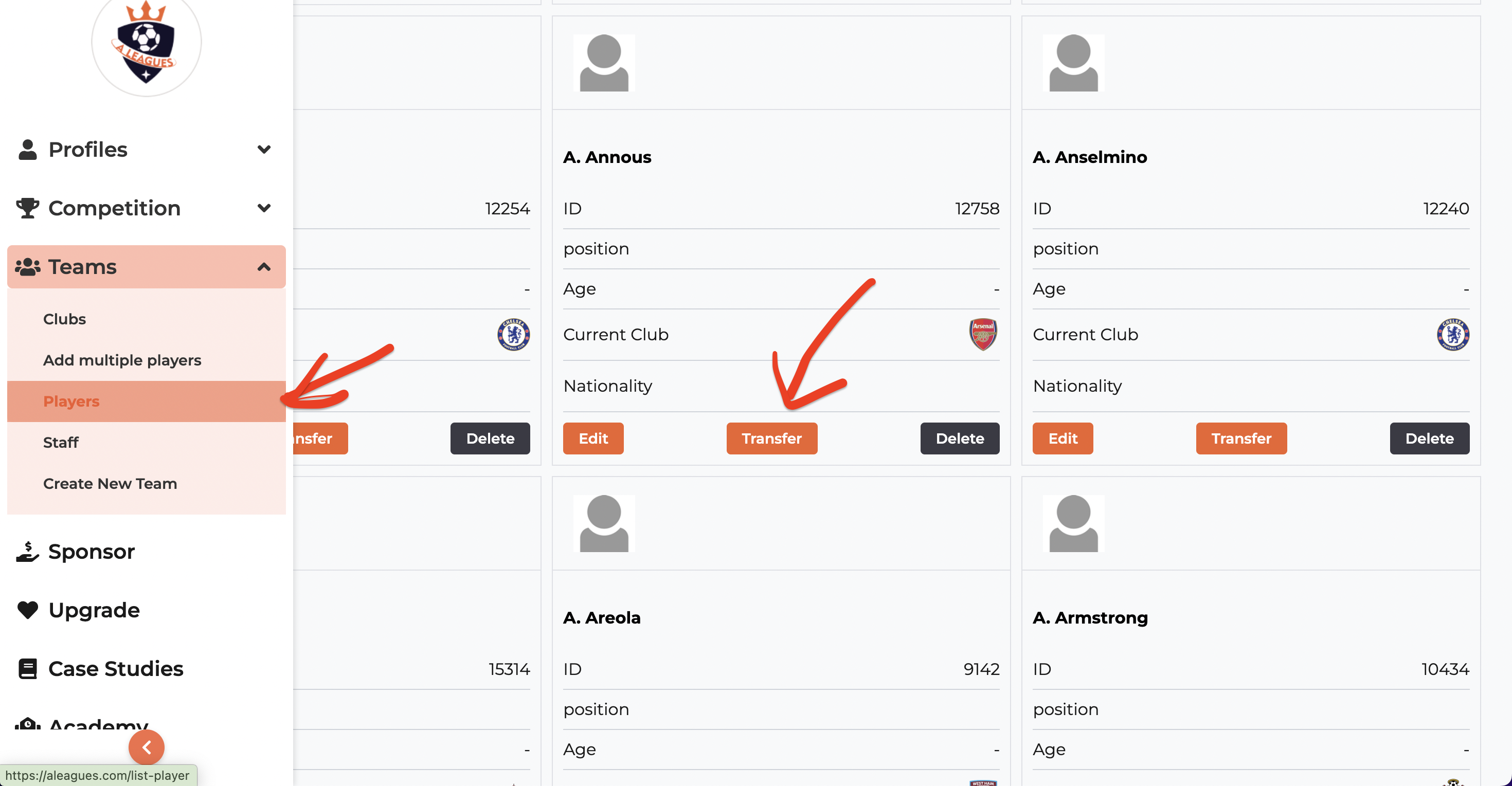
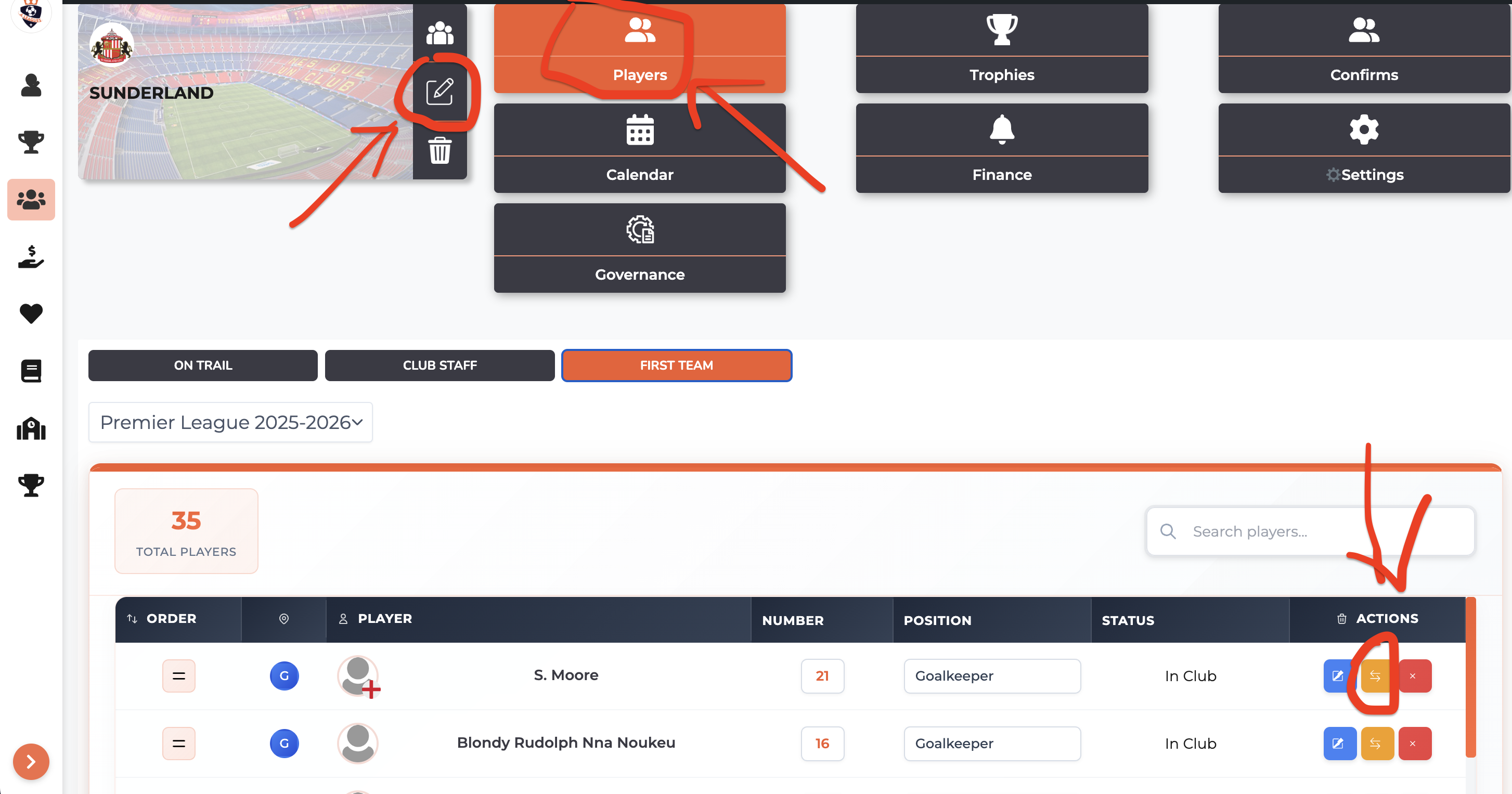
Transferring a Player Between Clubs
Option 1: From the Hamburger Menu, select Players.
Option 2: From the Club Profile/Settings” “Navigate to the specific Club, then open its Settings to initiate a transfer.”
Module 3.4: Communication
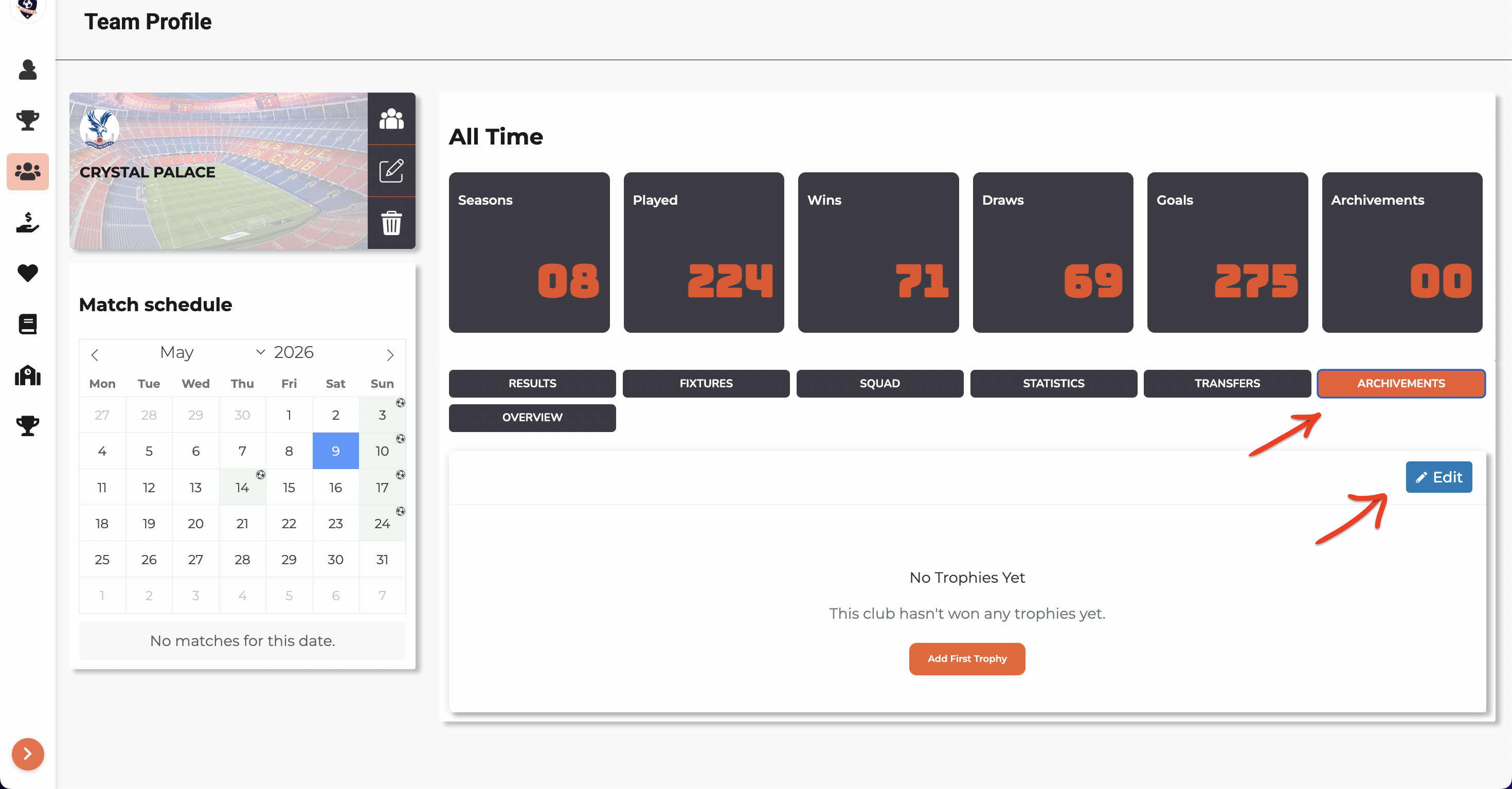
Module 4: Create Your Win Conditions With “Achievement”
The Art of Turning Goals into Legacies
In the world of sports, a team without a goal is like a ship drifting in the ocean without a map. As a sport manager, you are not just managing people; you are architecting dreams.
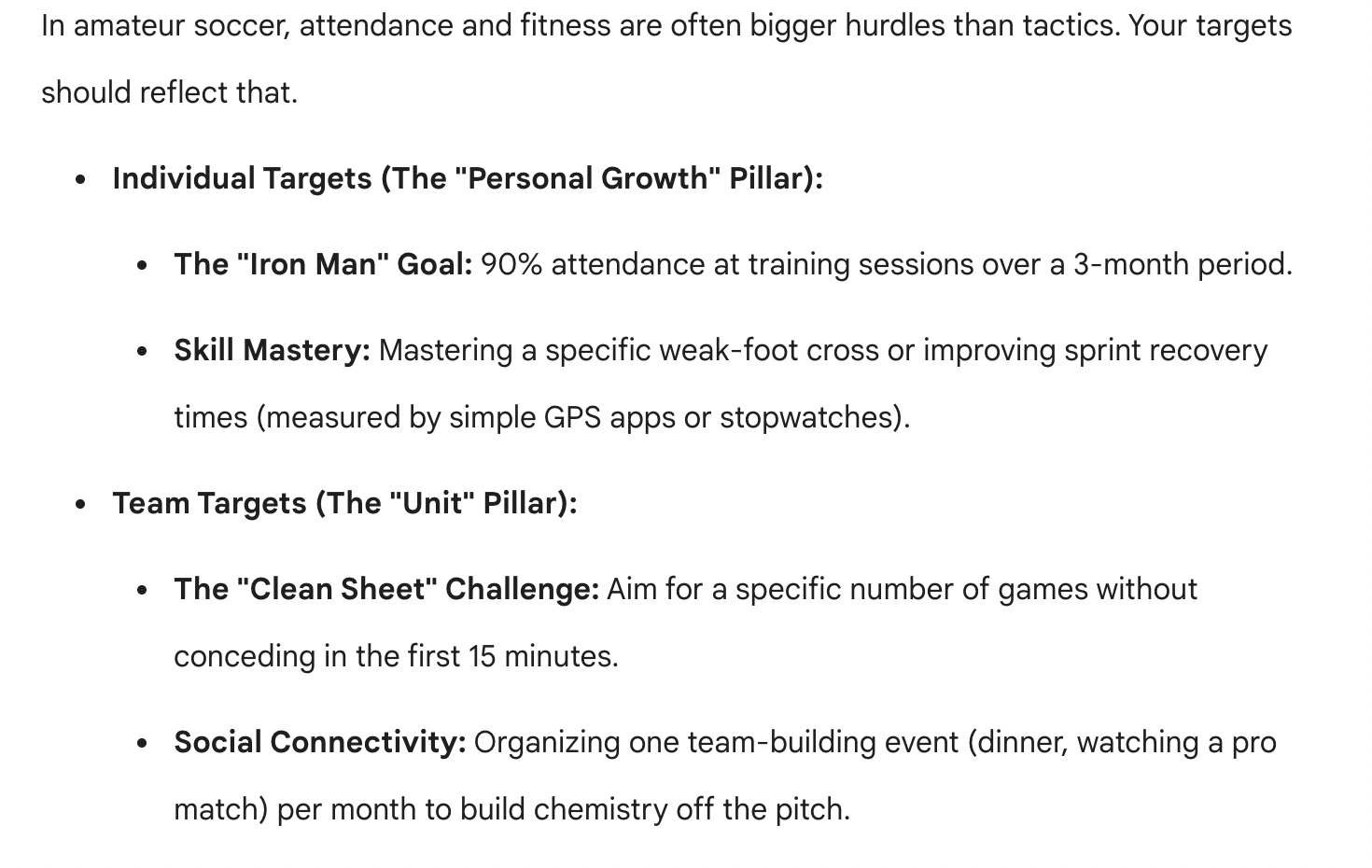
4.1 Targets: The Compass for the Warrior Instinct
Don’t just provide soulless numbers. Turn every target into a challenge of pride.
Individual Targets: These are the seeds of self-esteem. When each athlete sees a clear path for their own growth, they will contribute with 200% effort.
Team Targets: This is the bond that unites big egos. A goal significant enough will transform outstanding individuals into an unbreakable unit.
“Records are born to be broken, but ambition must be nurtured every single day.”
Example
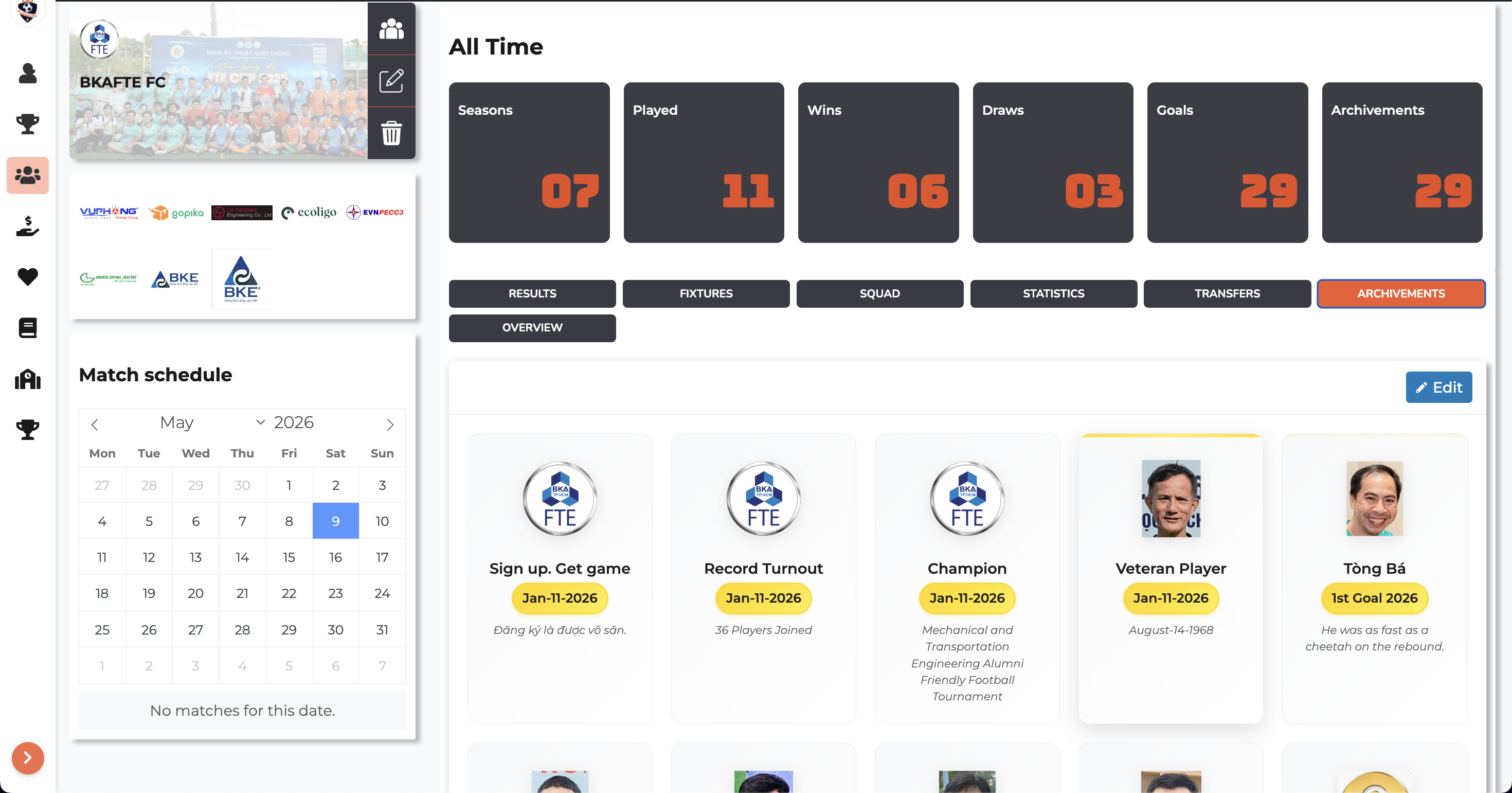
4.2. Achievements & Rewards: Fuel for Sustained Motivation
Rewards are not merely material; they are recognition.
Emotional Rewards: A timely pat on the back or a tribute post on the community page can sometimes be worth more than any paycheck.
Transparent Reward Systems: Help every member understand: “Your effort is always seen.”
4.3. A Message for the Future
Start setting the roadmap for the next season today. Don’t forget that ALeagues.com allows you to format friendly matches as a custom league with as many games as you want, whenever you want. Every friendly is treated as a mini-league for two teams. Turn your matches into an exciting journey by setting milestones, SMART goals, rewards, and long-term achievements.
Establish Milestones: Break the grand journey down into small weekly victories.
Create a “Celebration” Culture: Turn goal achievement into a festival, where one person’s success is the pride of the entire team.
Module 5: Create a Round-robin Competition with Basic or Advanced Settings
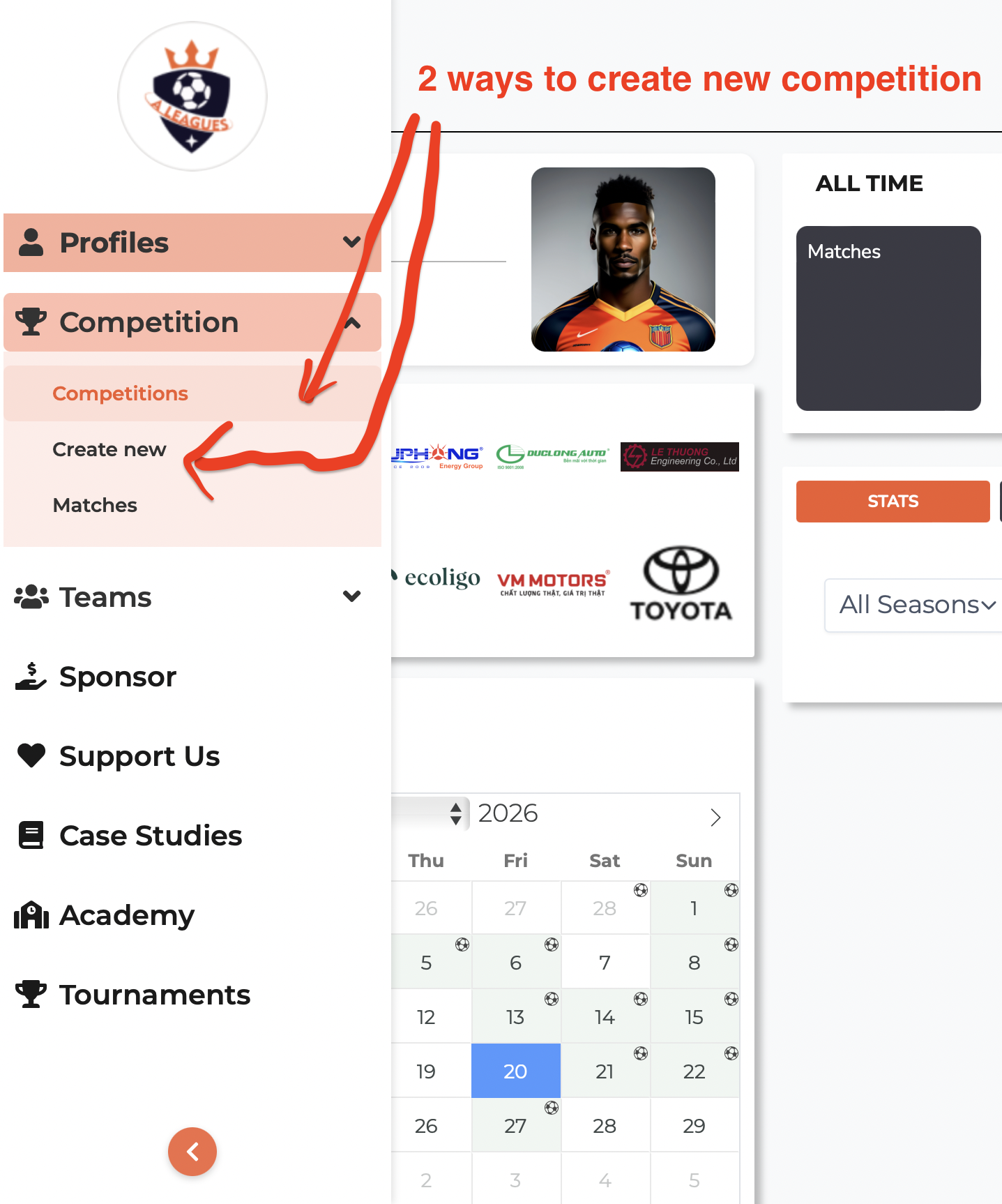
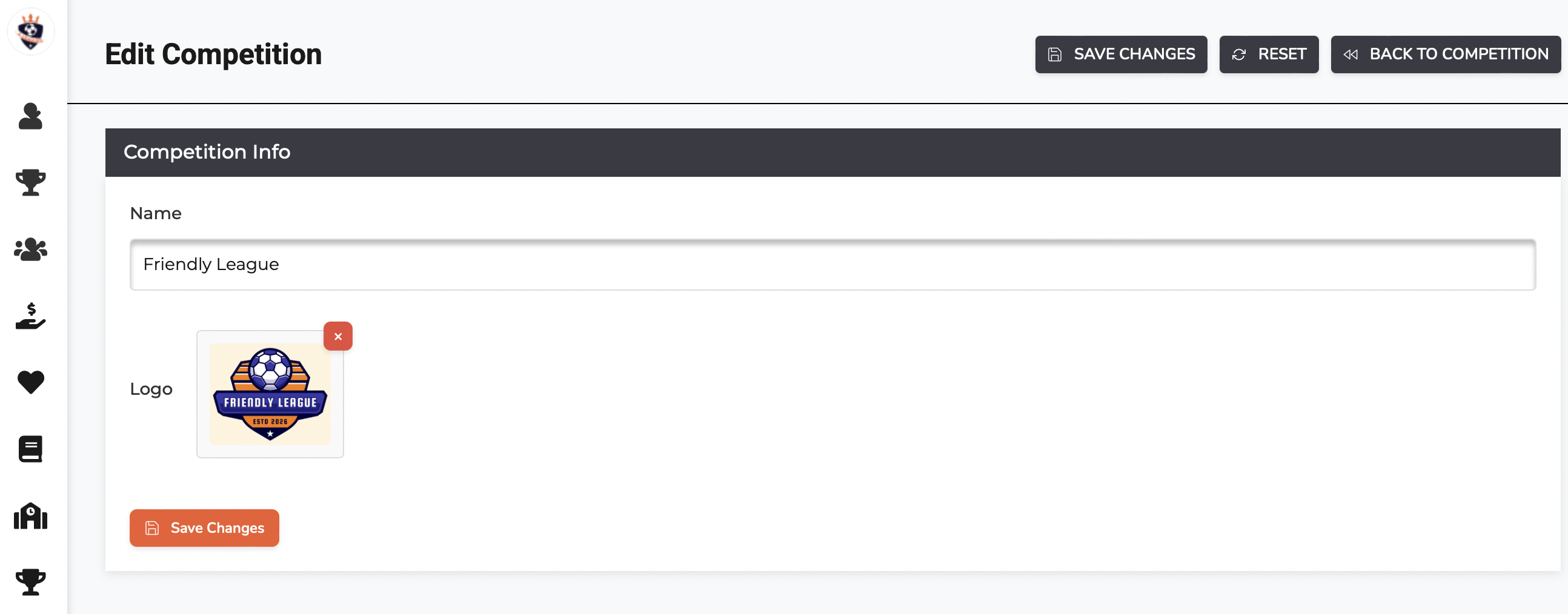
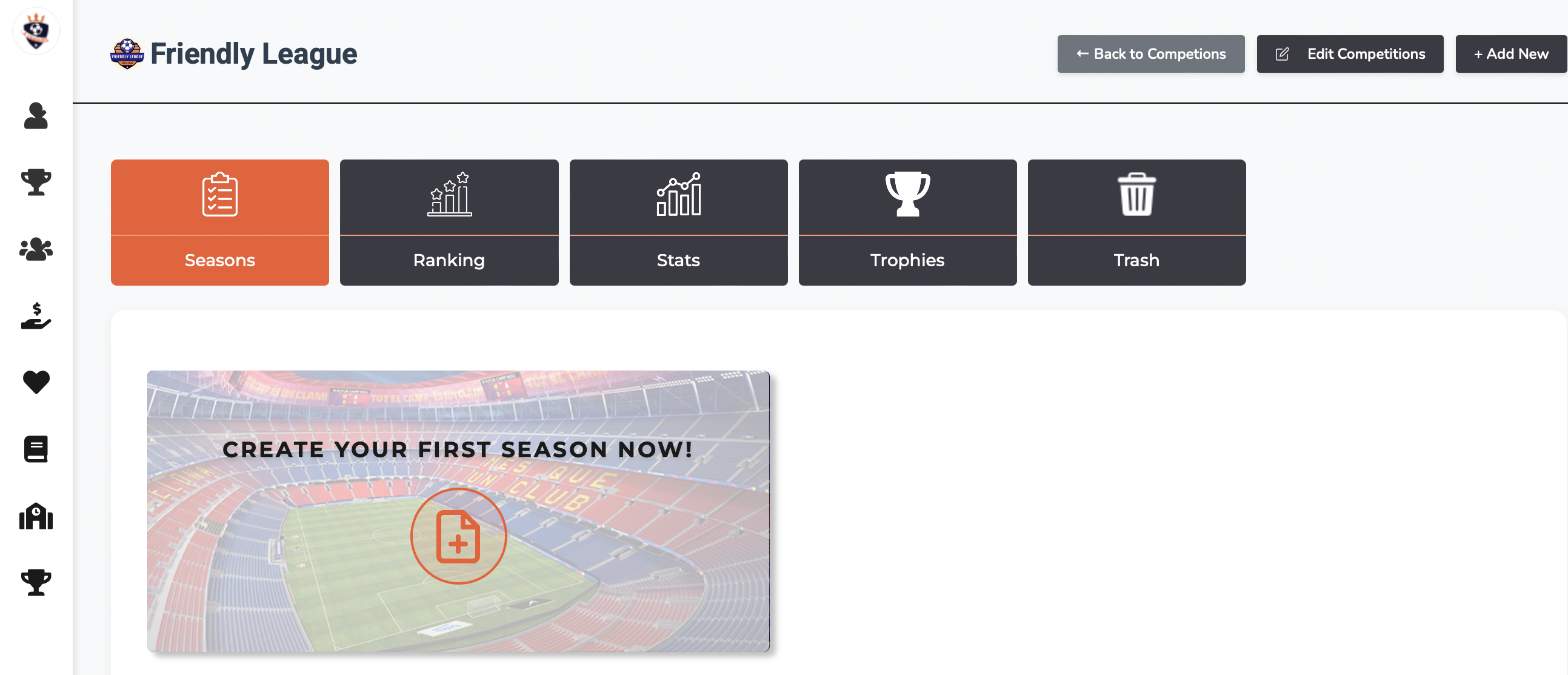
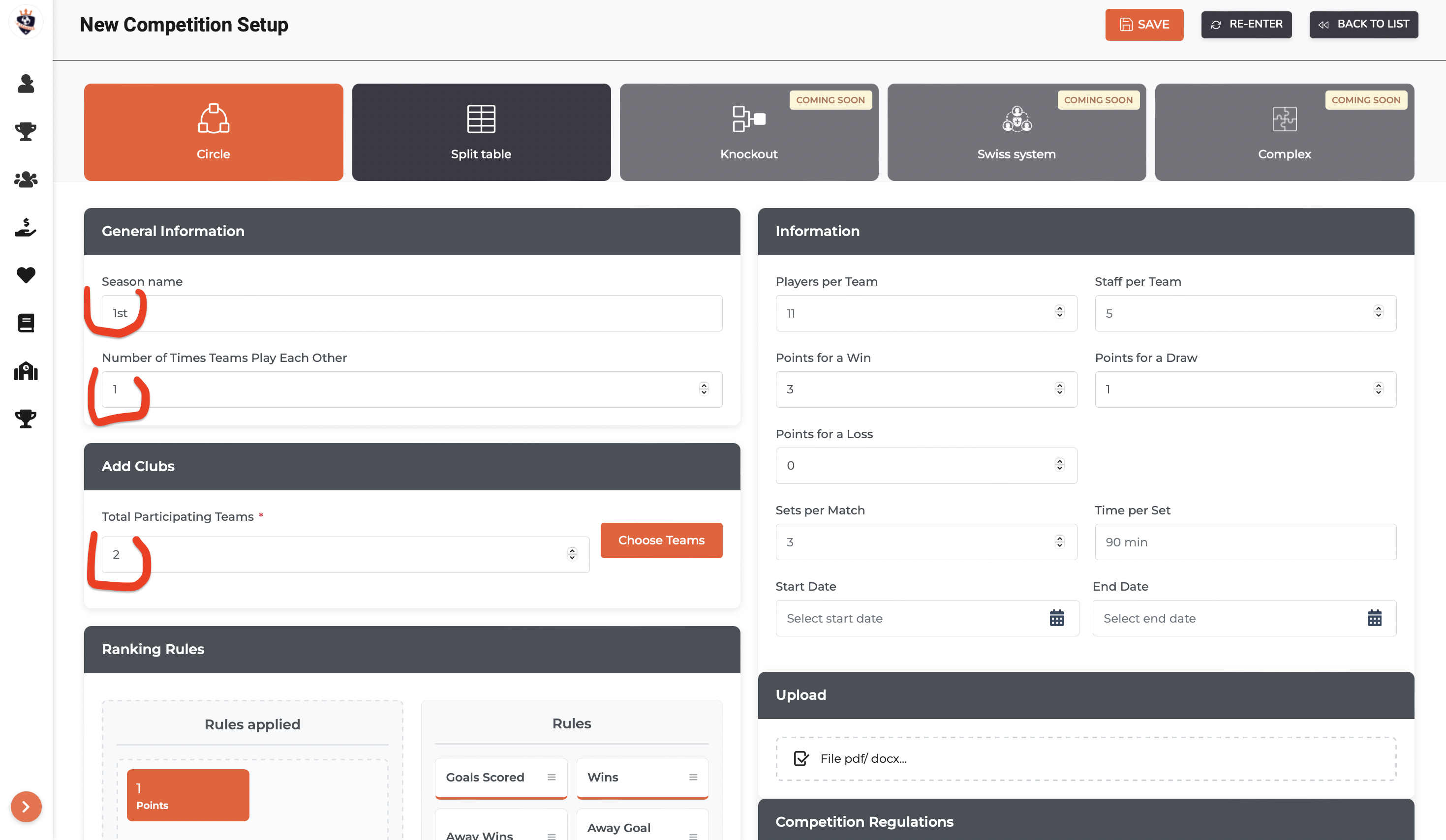
First, create a Competition by giving it a name (logo optional). Within that competition, you can apply a unique game format to every season. For example, the first season could follow a Round-robin format (2–50 teams), the second a Group format (16 teams), and the third a Swiss format (30 teams). While each season tracks its own individual stats (goals, assists, cards, etc.), the Competition provides All-Time Stats—a cumulative total of all statistics from every season within that competition.
Our platform offers two ways to set up your Round-robin league, depending on whether your team list is finalized.
1. Standard Round-robin (Pre-defined Teams)
Use this if you already have a complete list of teams and their rosters.
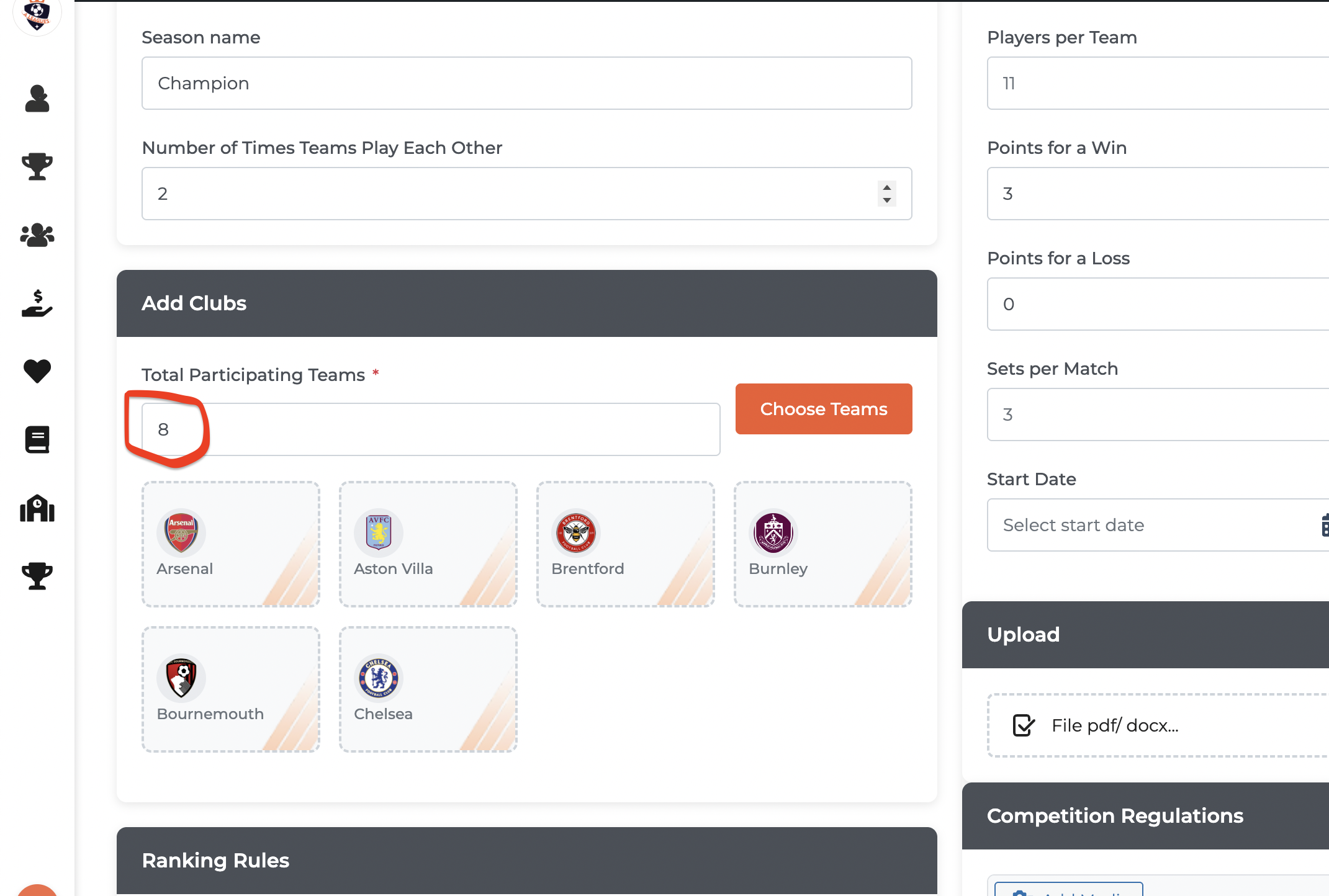
How it works: Simply select your teams (e.g., 8 teams with names and logos).
Scheduling: The system generates a full schedule immediately.
Ready to Play: Once the schedule is created, the tournament is ready to launch.
Use this if you want to start the league or generate schedules while still waiting for teams to register.
How it works: If you have 6 confirmed teams but want an 8-team league, the system can add automatically 2 Placeholder Teams.
Dynamic Scheduling: You can generate a full schedule even with missing teams. The system uses “Holders” to fill the spots in the fixture list.
Seamless Entry: The league can begin running immediately. You can replace the placeholders with actual teams later, or proceed without them if the spots aren’t filled.
Why use Advanced Round-robin?
Start Early: Don’t wait for late registrations to organize your calendar.
Professional Planning: Give your confirmed teams their match dates and times in advance.
Automatic Updates: Once a new team joins, they simply step into the “Holder” position in the existing schedule.
Module 6: Create A Group Stage Competition from basic to advance
First, create a Competition by giving it a name (logo optional). Within that competition, you can apply a unique game format to every season. For example, the first season could follow a Round-robin format (2–50 teams), the second a Group format (16 teams), and the third a Swiss format (30 teams). While each season tracks its own individual stats (goals, assists, cards, etc.), the Competition provides All-Time Stats—a cumulative total of all statistics from every season within that competition.
Module 7: Create A Cup Competition from basic to advance
First, create a Competition by giving it a name (logo optional). Within that competition, you can apply a unique game format to every season. For example, the first season could follow a Round-robin format (2–50 teams), the second a Group format (16 teams), and the third a Swiss format (30 teams). While each season tracks its own individual stats (goals, assists, cards, etc.), the Competition provides All-Time Stats—a cumulative total of all statistics from every season within that competition.
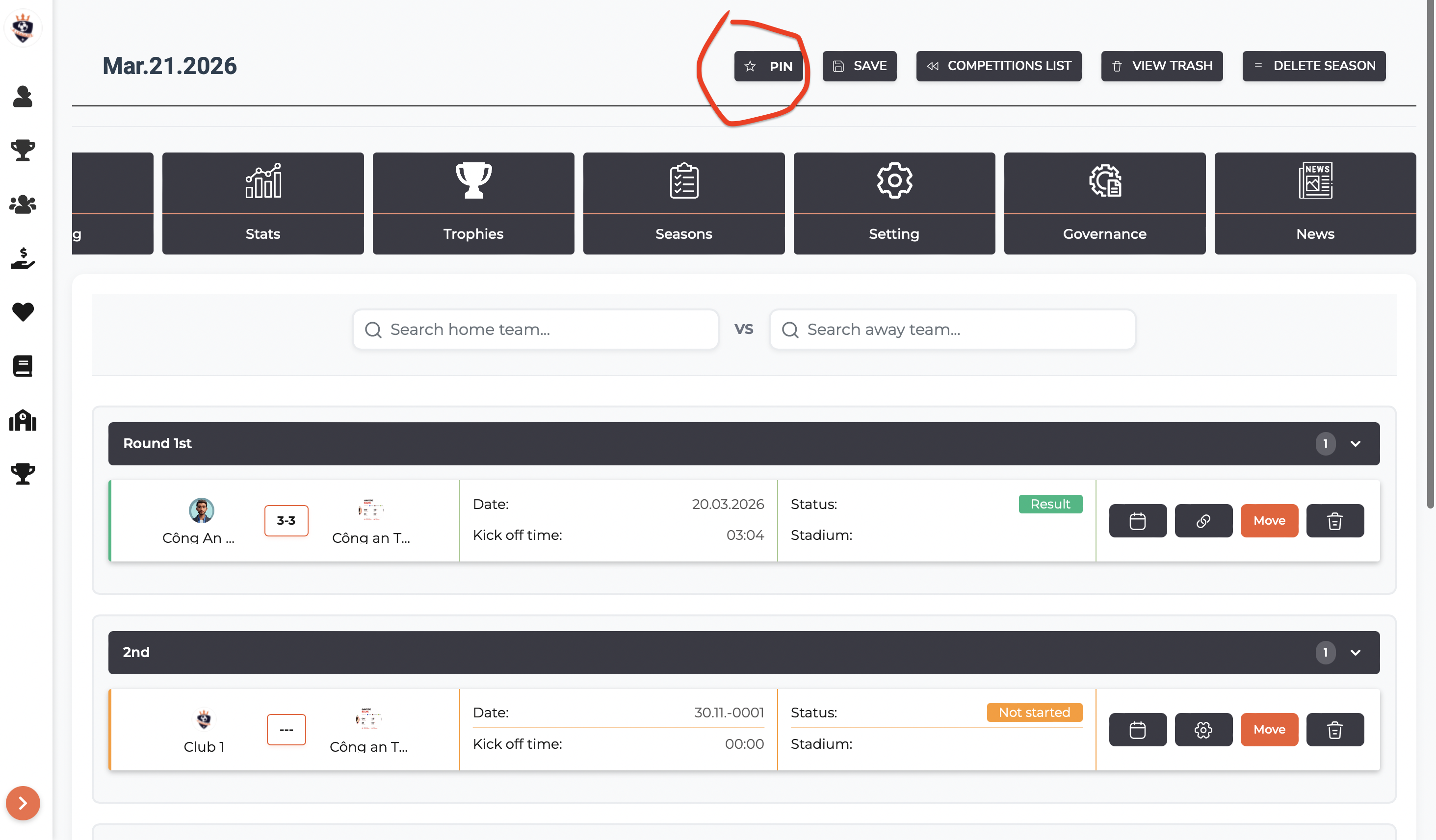
Module 8: Pin A Season To Homepage To Create Shortcut
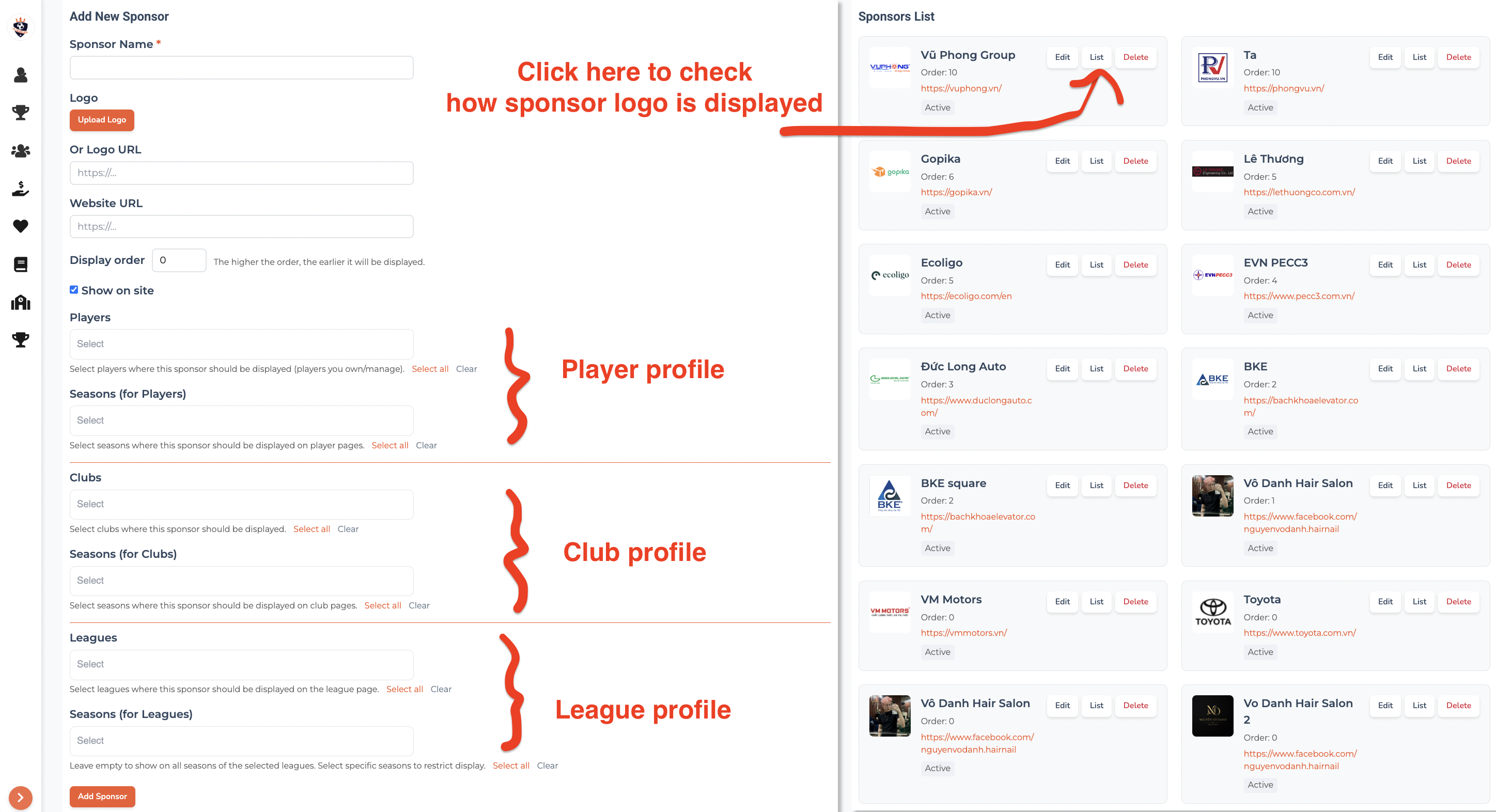
Module 9: Add Partners or Sponsors
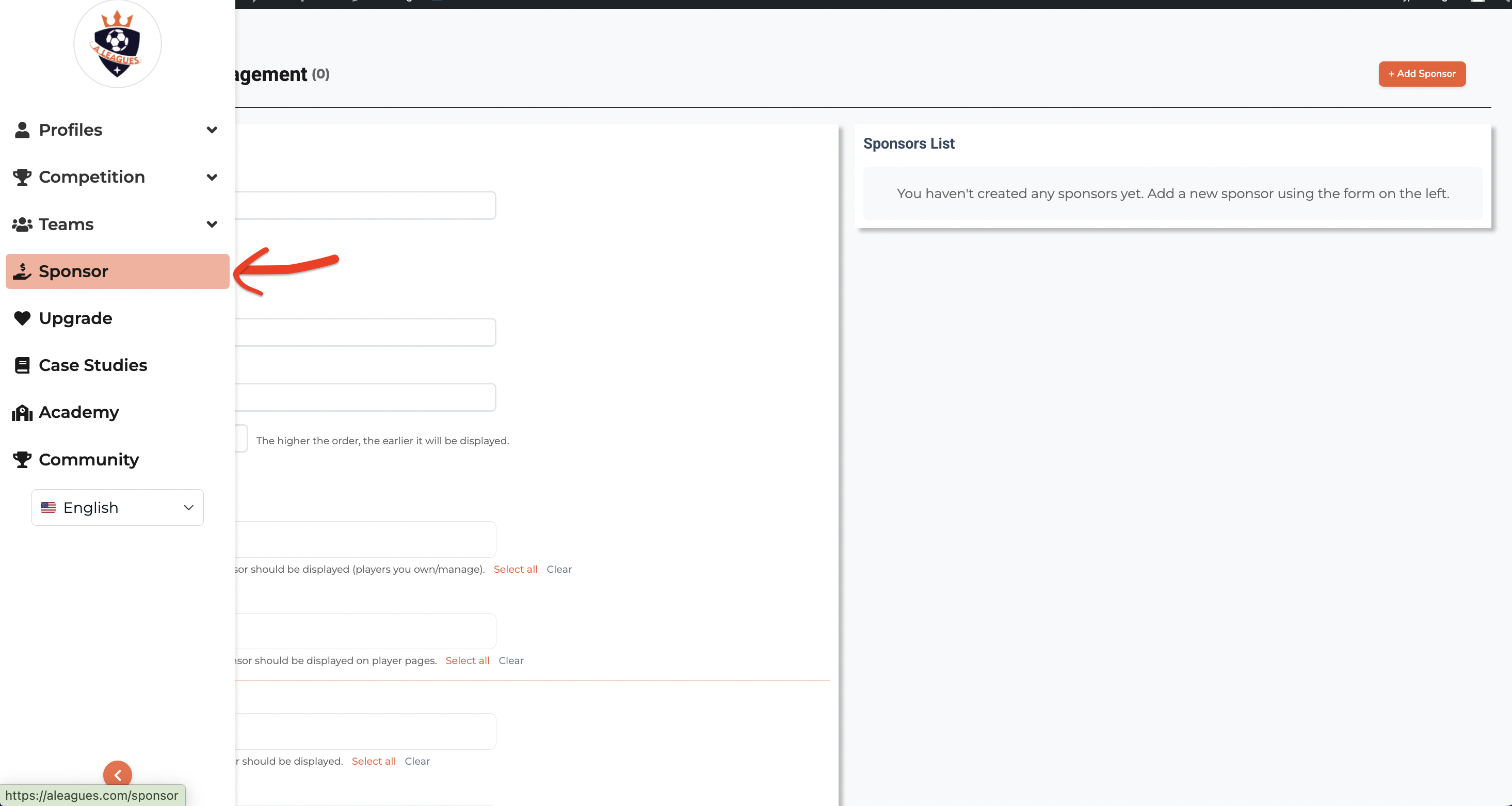
Step 1: Open the hamburger menu and select Sponsor.
Step 2: Configure sponsor logo display settings for individual seasons or all seasons linked to your player, club, or competition.
Module 10: Create A Swiss-format Competition (coming soon)
Module 11: Create A Complex-format Competition (coming soon)
Module 12: Training Plan (coming soon)
The 17 Indisputable Laws of Teamwork
The Law of Significance: One is too small a number to achieve greatness; every great achievement requires the contribution of a collective.
The Law of the Big Picture: The overall goal of the team is more important than the role or glory of any individual.
The Law of the Niche: All players have a place where they add the most value, and a team is strongest when everyone is in the right position.
The Law of Mount Everest: As the challenge escalates, the need for teamwork elevates.
The Law of the Chain: The strength of the team is measured by its weakest link.
The Law of the Catalyst: Winning teams have players who make things happen and create breakthroughs.
The Law of the Compass: A clear vision provides members with focus and keeps them headed in the right direction.
The Law of the Bad Apple: Rotten attitudes ruin a team, regardless of how talented the individuals may be.
The Law of Countability: Teammates must be able to count on and rely on each other when it counts.
The Law of the Price Tag: The team fails to reach its potential when it fails to pay the price of sacrifice.
The Law of the Scoreboard: A team needs to know where it stands to make timely adjustments toward victory.
The Law of the Bench: Great teams have depth; they need excellent substitutes and supporters, not just starters.
The Law of Identity: Shared values are the bond that holds everyone together.
The Law of Communication: Smooth interaction is the lifeblood of every team activity.
The Law of the Edge: The difference between two equally talented teams is leadership.
The Law of High Morale: When morale is high, every obstacle can be overcome and victory becomes easier.
The Law of Dividends: Investing in the team is the most sustainable long-term investment you can make.
The 17 Laws Applied to Team vs. Individual
While the laws are written for teams, they have powerful parallels for “The Team of One” (your own habits, mindset, and discipline).
Here is a comparison table showing how each law translates from a Team Perspective to an Individual Perspective:
Law
Team Application (Group Success)
Individual Application (Personal Growth)
1. Significance
Most significant achievements are the result of teamwork.
Accept that you need help/mentors to reach big goals.
2. Big Picture
The team’s goal is more important than personal glory.
Your long-term purpose is more important than short-term comfort.
3. Niche
Put people in roles where they thrive.
Identify your unique strengths and focus 80% of your time there.
4. Mt. Everest
High challenges require high-level teamwork.
Big dreams require a “Personal Board of Directors” or support system.
5. Chain
The team is only as strong as its weakest member.
Identify your biggest weakness; Strengthen it or get help.
6. Catalyst
Winning teams need “spark plugs” who initiate action.
Be a self-starter; don’t wait for others to motivate you.
7. Compass
Vision gives the team direction.
Set clear, written goals so you don’t drift aimlessly.
8. Bad Apple
Rotten attitudes ruin the whole team.
Monitor your self-talk; a negative mindset sabotages your talent.
9. Countability
Teammates must be able to count on each other.
Be reliable; keep the promises you make to yourself.
10. Price Tag
You must sacrifice to reach the team’s potential.
Understand that success requires “paying the price” (time, sweat, study).
11. Scoreboard
Tracking progress allows for adjustments.
Use a habit tracker or journal to measure your own progress.
12. Bench
Depth and backups ensure long-term success.
Build “mental reserves” and diverse skills to handle unexpected crises.
13. Identity
Shared values define the team.
Define your personal core values; they guide your hard decisions.
14. Communication
Open dialogue prevents misunderstandings.
Practice “Internal Communication”—be honest with yourself about your fears.
15. Edge
Leadership is the difference-maker.
Take leadership of your own life; stop playing the victim.
16. High Morale
Positive energy makes everything easier.
Cultivate a “Growth Mindset” to stay resilient during failures.
17. Dividends
Investing in the team pays off later.
Invest in your education and health; the ROI is lifelong.